Kristina Blokhin | stock.adobe.com
The United States Senate Committee on Appropriations has approved the Fiscal Year (FY) 2026 Interior, Environment, and Related Agencies Appropriations Act, saying the spending measure provides “support for tribal programs, National Parks, public lands and federal efforts to suppress wildfires.”
The measure, which was advanced by a vote of 26-2, provides $38.6 billion in nondefense discretionary funding that includes funding for the U.S. Environmental Protection Agency (EPA).
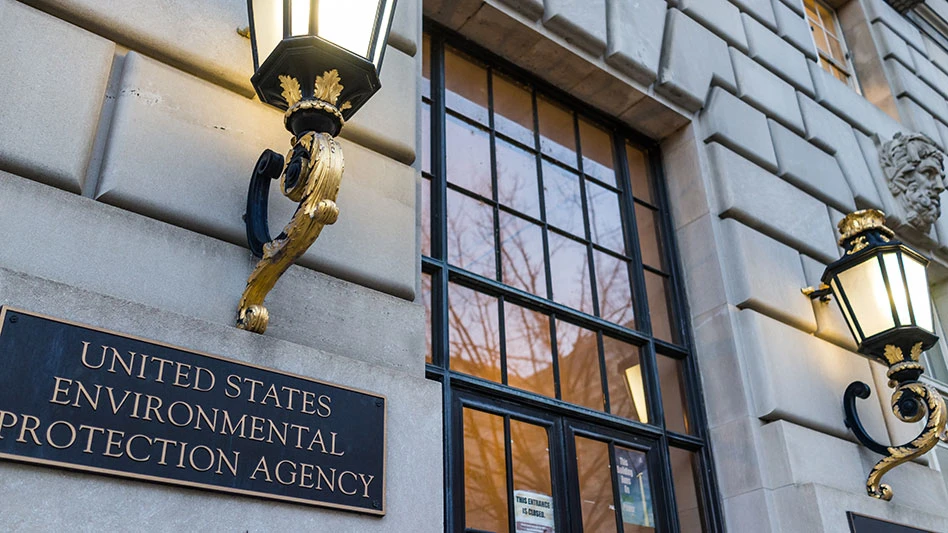
That agency—with oversees research and grant funding efforts that include several tied to waste management, recycling and brownfield remediation and demolition activities—will experience fiscal year budget cuts of about 5 percent if the Senate bill becomes law, according to the Washington-based Environmental Protection Network (EPN).
“Although the bill’s topline numbers fall short of the funding EPA needs to fully do its job, one thing is clear: this bipartisan Senate bill is a sharp repudiation of the massive 55 percent cut sought by President Trump,” writes the EPN.
The environmental advocacy group mentions four Senators for helping introduce and advocate for the bill: Lisa Murkowski (R-Alaska); Jeff Merkley (D-Oregon); Susan Collins (R-Maine) and Patty Murray (D-Washington).
“It’s a welcome breath of clean air when Republicans and Democrats work together to reject the extreme EPA budget cuts sought by President Trump,” says Michelle Roos, executive director of the EPN. “This spending plan sends a clear and bipartisan message to the Trump administration that they have gone too far and must back off their plans to lay off EPA staff and shut down critical parts of the agency such as EPA’s science offices.”
“I am proud of the bipartisan and thoughtful work that went into the Interior-Environmental Fiscal Year 2026 (FY26) Appropriations Act,” says Murkowski.
“This legislation fulfills our commitments to tribes while balancing energy production, conservation and recreation,” continues the senator. “It also supports our public lands while providing for clean air, clean water and clean soil.”
An Appropriations Committee news release says the bill restores $8.6 billion in EPA program and grant funding, along with $3.3 billion to the National Parks Service and similar and smaller announcements to other programs in the Department of the Interior.
A U.S. House version of the bill that is far less generous to the EPA passed that chamber’s Appropriations Committee this Tuesday by a narrower vote of 33 to 28.
The House Appropriations Committee press release covering that version of the bill refers to “rightsizing agency funding levels, including a $2.1 billion reduction (23 percent) to the Environmental Protection Agency.”
According to Molly Reynolds of the Washington-based Brookings Institution, who submitted an explanation to the Environmental and Energy Study Institute (EESI) website earlier this year, “Budget reconciliation is a unique legislative process that allows Congress to pass spending, revenue and debt-related bills with a simple majority in the Senate, bypassing the filibuster that would normally require a three-fifths vote.”
Adds Reynolds, “It starts with a budget resolution that includes reconciliation instructions directing specific Congressional committees to draft legislation within certain fiscal parameters.”
The policy analyst also wrote that a fiscal year 2026 budget resolution “could be used later in the year, with a deadline of Sept. 30, 2026.”
Latest from Construction & Demolition Recycling
- Vermeer announces plan to build new facility in Des Moines metro area
- Capstar Disposal expands roll off dumpster rental services
- Supreme Court strikes down IEEPA tariffs
- Casella details facility closures, expansion efforts
- DPR Construction cuts ribbon on Silicon Valley office, prefab facility
- Constellium posts record Q4 adjusted EBITDA
- Amrize closes PB Materials acquisition
- QCC torches include customizable features