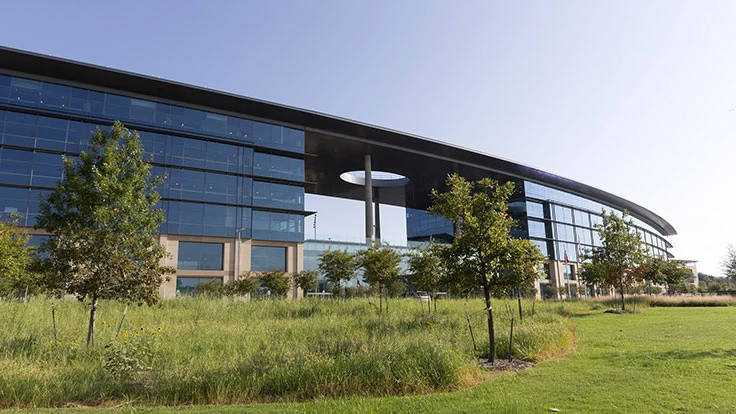

Jonathan Kraatz, executive director of USGBC Texas Chapter, presented the plaque to Jim Lentz, TMNA president and CEO, at the new campus.
"At Toyota, we have a longstanding commitment to sustainability and preserving our natural resources," says Lentz. "With the installation of green spaces, thousands of solar panels, a massive rain water capture system and natural light wells, we have designed our new headquarters to reflect the local habitat and enhance its biodiversity. Recognition as a LEED Platinum facility is a testament of our efforts to become a model for energy efficiency and sustainability and speaks to our challenge to ourselves to create a net positive impact on the planet by 2050."
"USGBC is proud to award LEED Platinum to Toyota, for their thoughtfulness in their campus energy planning and space design as well as the overall net positive impact on the community and environment," says Kraatz. "Our mission at USGBC has challenged organizations to move faster and reach further than ever before, and Toyota's new Texas campus is a great example of what can be accomplished with the right leadership."
The 100-acre campus uses renewable energy, has drought resistant landscaping and recycled construction and demolition (C&D) debris.
Recycling:
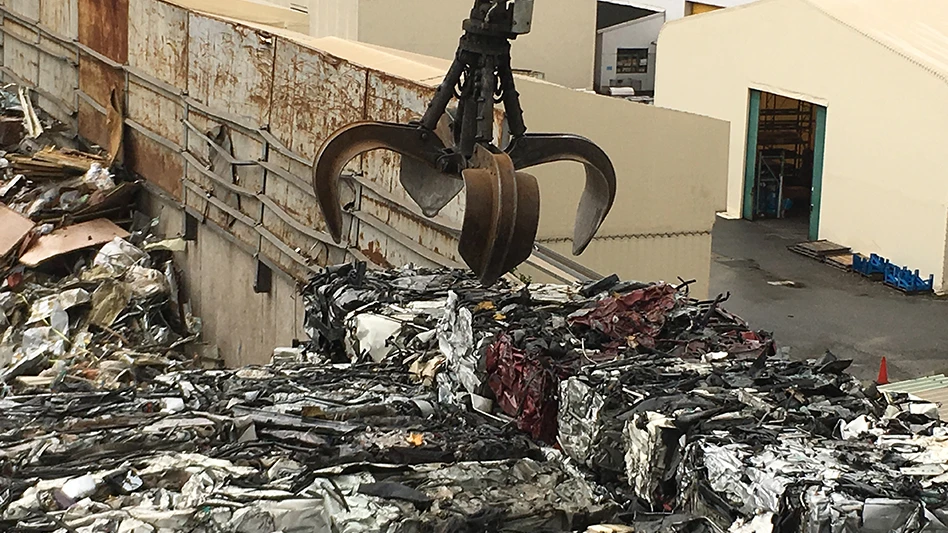
More than 99 percent of the construction debris was recycled
Construction waste was sorted off-site at a north Texas C&D debris processing facility
Renewable energy:
An on-site corporate solar installation
An 8.79-megawatt solar power system designed and installed by SunPower Corp., San Jose, California
System designed to produce up to 33 percent of daily electric needs for headquarters campus
Designed to reduce annual carbon dioxide emissions by 7,198 metric tons
Made to create enough energy to power 1,200 average U.S. homes for a year
Installation of high efficiency lighting and building envelopes
Specialized rooftop designed with plant life designed to manage rainwater, reduce heat and further insulate the buildings
Flexible energy contract to preserve and resell excess power generation back to the grid
Grid energy offset by Texas wind farm renewable energy credits
Repurposed Rainwater
Rainwater capture system designed to provide up to three months of water supply for irrigation use
Cistern water storage manufactured with a capacity to hold 400,000 gallons of harvested rain water
Estimated to save more than 11 million gallons of potable water annually
Excess drain water will be collected and repurposed for sanitary facility use
Sustainable Landscaping
Exterior landscaping features drought-tolerant, north Texas indigenous plants like savannah, oaklands and wildflower meadows
Campus landscape will provide a natural habitat for endangered pollinators and monarch butterflies
Approximately 1,300 trees planted on-site by Toyota
More than 80 mature trees saved or relocated on-site, including a 100-year-old oak tree
Landscaping will be managed without expensive mowing, fertilizers, chemicals or artificial irrigation
Historic wetlands on the northeast corner of the campus were preserved to protect its natural state
Professionals who led this project include a host of Dallas-based firms: KDC Real Estate Development & Investments to develop and build the campus, architect Corgan Associates to design the campus and Austin Commercial to manage the construction.
Latest from Construction & Demolition Recycling
- Vermeer announces plan to build new facility in Des Moines metro area
- Capstar Disposal expands roll off dumpster rental services
- Supreme Court strikes down IEEPA tariffs
- Casella details facility closures, expansion efforts
- DPR Construction cuts ribbon on Silicon Valley office, prefab facility
- Constellium posts record Q4 adjusted EBITDA
- Amrize closes PB Materials acquisition
- QCC torches include customizable features