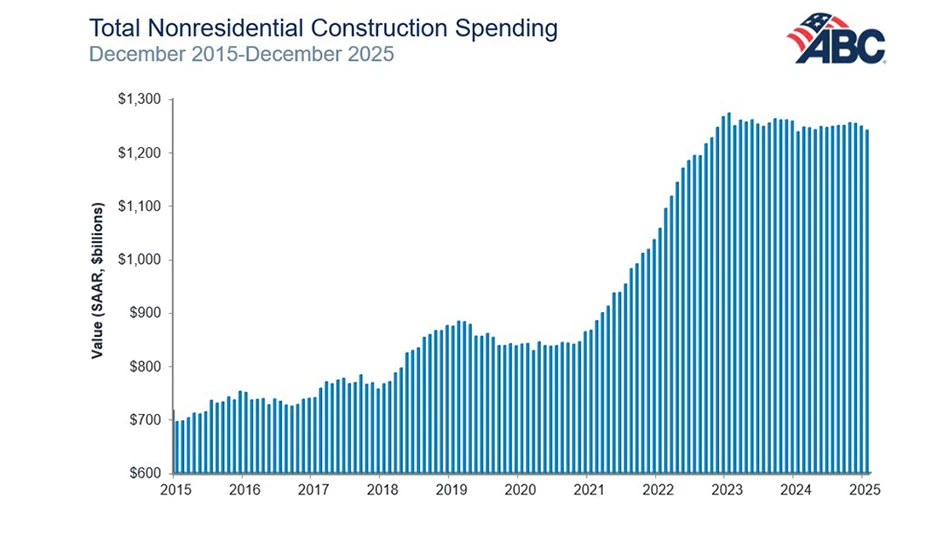
While single-family homebuilding continues to lag, strong showings in other categories of construction pushed total
“Total construction spending rose modestly in February, but that understates the sizzling gains in most categories other than single-family homebuilding,” says Ken Simonson, chief economist for the Associated General Contractors of America (AGC), commenting on the March 30 construction spending report from the U.S. Census Bureau.
The 0.3 percent increase followed two months of decreases, according to Simonson. “That masks a 1.5 percent jump in nonresidential spending, a 2.7 percent increase in residential improvements and no change in new multifamily construction. Those gains outweighed the freeze in new private single-family construction, which tumbled 2.9 percent for its 11th straight decrease,” Simonson says. He continues, “Compared to February 2006, private nonresidential construction was up 16 percent, public construction was 10 percent higher, residential improvements climbed 17 percent, multifamily edged up 2 percent, but new single-family construction was off 28 percent.
“The leading private nonresidential categories rose compared to February 2006 and included lodging, up 45 percent; office, 32 percent; manufacturing, 23 percent, hospitals, 19 percent; multi-retail, 17 percent; and educational 17 percent,” Simonson says, adding that he expects more of the same for 2007, except for some possible weakening in office and retail.
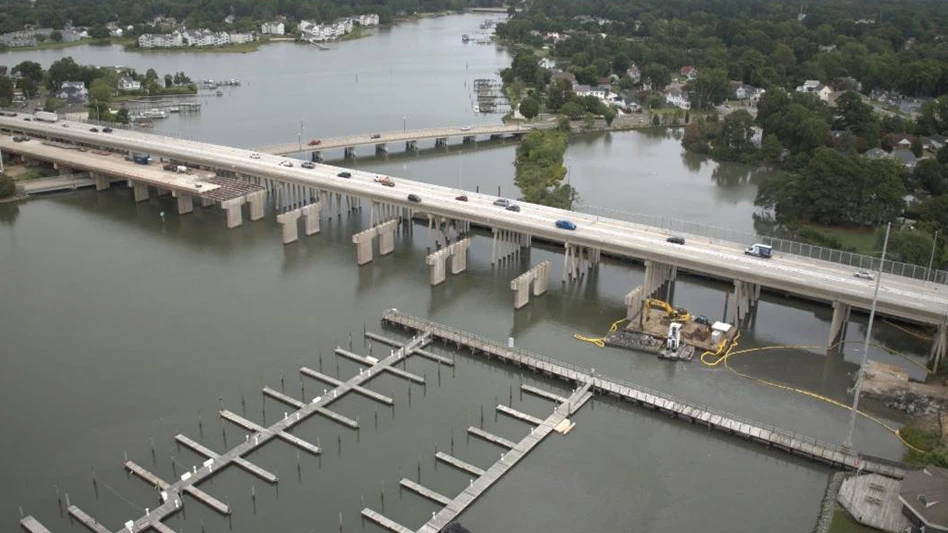
“The two big public categories—highways and streets, and education—accounted for a bit more than half the public total,” Simonson says. “In February, highway construction was 11 percent higher than a year before, and educational was up 7.6 percent, similar to the 2006 pattern. The next largest public category, transportation facilities, jumped 17 percent. For the year, public construction should continue to rise, but some contracts will be delayed because materials costs are likely to push bids beyond the level that agencies had budgeted for,” Simonson says.
More information is available at www.agc.org.
Latest from Construction & Demolition Recycling
- Greenwave raises revenue but loses money in Q2 2025
- Recycled steel prices hold steady
- John Deere launches ‘Building America’ excavator contest
- Triumvirate Environmental acquires Environmental Waste Minimization
- Coastal Waste & Recycling expands recycling operations with Machinex
- Reconomy acquires German-based GfAW
- CommanderAI launches HaulerCentral database
- Glass Recycling Foundation releases 2025 Impact Report