Photo courtesy of Trimble

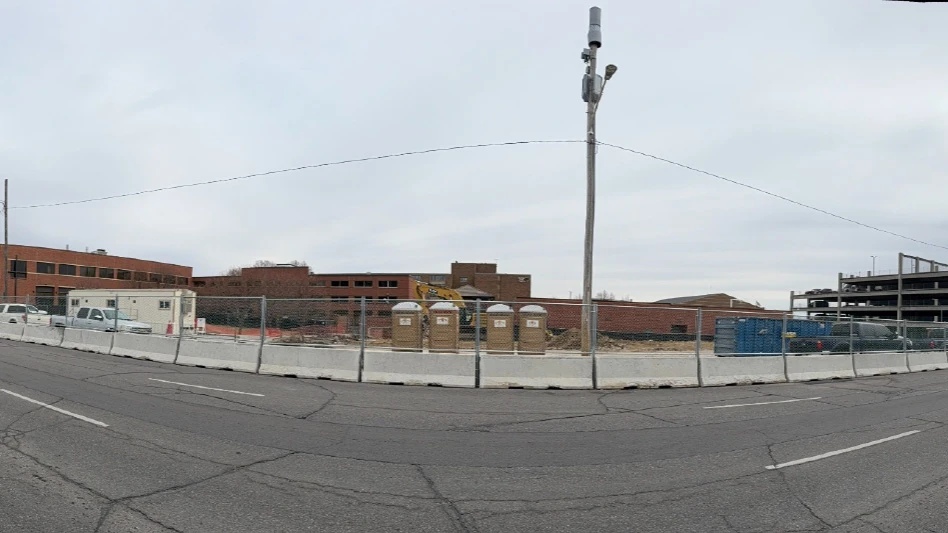
Maintaining control and driving efficiency are constant priorities for contractors, but achieving both can be difficult in the fast-paced demolition environment, where equipment resources are always in demand and frequently on the move. One technology helping to close this gap is geofencing, a feature that can supplement equipment maintenance software and resource scheduling software, enabling contractors to identify the precise location of equipment at various jobsites.
In this article, we explore maintenance software through the lens of geofencing and highlight key efficiencies it provides for today’s demolition contractors.
Boosting efficiency with maintenance software
While features differ across platforms, every computerized maintenance management system (CMMS) is designed with the same core goal: helping maintenance teams prevent problems instead of simply reacting to them. The result is more efficient maintenance work and smarter, data-driven decisions.
A CMMS automates preventive maintenance by tracking use data, such as engine hours, and generating notifications before service intervals are due. This proactive approach increases the likelihood that scheduled maintenance is completed on time. That translates into increased prevention of problems and the correction of minor ones before they become big ones, cutting maintenance costs and downtime. Online applications further streamline the workflow, from evaluating and prioritizing work requests to scheduling and completing work orders, processing mechanic payroll, managing parts inventory and handling other routine tasks.
By centralizing information, a CMMS also can make it easy to access detailed records for each asset, including full repair histories. With reporting and analytics, maintenance leaders gain the insights they need to guide decisions around asset use, mechanic staffing and whether it’s more cost-effective to replace equipment or continue maintaining it.
Geofencing—a technology that allows contractors to create virtual boundaries around specific areas to monitor activities using GPS, RFID, Wi-Fi or cellular data—helps protect assets from construction site theft, minimizes downtime, maximizes productivity and enables data-driven decisions. By allowing contractors to establish virtual boundaries around jobsites or facilities, geofencing can deliver real-time visibility into asset locations and usage. The result: streamlined operations, reduced waste and more informed decision-making.
The 85/15 rule
Geofencing is transforming maintenance operations by giving contractors real-time visibility into equipment status and location. This insight can help maximize the productivity of mechanics, who often are among the highest-paid and hardest-to-find team members.
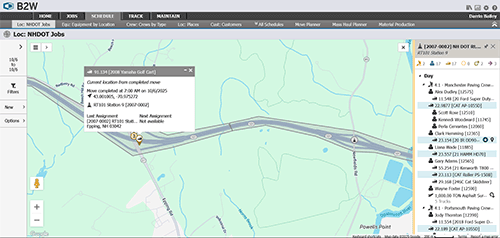
With geofencing, contractors quickly can identify needs, streamline maintenance workflows and shift from reactive fixes to proactive strategies. The impact can be even greater when geofencing features are integrated directly into equipment maintenance software.
Industry experts estimate that 85 percent of all maintenance should be preventive. If your crew spends more than 15 percent of its time handling breakdowns, it could be time to reevaluate your approach. In construction, knowing where your assets are at all times is more than a convenience—it’s a competitive advantage.
The efficiencies extend beyond scheduling. Geofencing reduces unnecessary drive time, cutting fuel costs and environmental impact. For example, a shop manager scheduling maintenance for one machine also can see all other equipment within the same geofence that needs service, whether repairs or preventive work. Instead of sending mechanics out multiple times, one well-equipped visit can take care of everything in one trip. They could even find it cost-effective to do upcoming preventive tasks in advance on equipment within the geofence rather than making another trip in the near future. All of this leads to fewer trips, less downtime and a smoother workflow.
Now imagine scaling those efficiencies across multiple jobsites and dozens of work orders. The results speak for themselves: Contractors implementing geofencing solutions are saving millions of dollars.
Real-time visibility delivers smart results
Real-time telemetry data combined with geofencing can give dispatchers the tools they need to make smarter and faster decisions. From mobilizing equipment to optimizing workforce deployment, these technologies are helping contractors improve efficiency across every project.
Geofencing also ensures accountability. Dispatchers can confirm that equipment is exactly where it’s supposed to be, avoiding wasted trips and costly delays. This is especially valuable when scheduling equipment moves. Too often, a transport crew arrives at a site only to discover the machine already has been relocated without notice—a frustrating and expensive scenario that geofencing helps prevent.
With each jobsite assigned a geofence and every piece of equipment feeding in telematics data, dispatchers can verify asset locations in real time before approving and implementing a move. And the benefits don’t stop there. Contractors often rent equipment or haul machines from distant sites when, in reality, unused assets already could be sitting idle nearby. By layering geofencing with meter-reading features from the CMMS, teams can gain visibility into actual use, saving time, money and resources while preventing equipment from being hoarded or left underused.
Equipment maintenance and resource scheduling software applications that communicate with each other provide contractors with a final advantage when it comes to efficiency. Schedulers and dispatchers, by seeing the upcoming maintenance requirements, can plan equipment assignments and moves around that schedule. Likewise, maintenance managers can coordinate repair work, when possible, at times that will least disrupt production.
Is a CMMS with geofencing right for me?
Fleet size is a starting point in assessing the feasibility of maintenance software. The type of equipment and the work it does also factor in, as some assets require more frequent, intensive and complicated maintenance than others.
The minimum threshold varies, but even companies with a dozen or so assets could benefit, and any company with 25 pieces of equipment should at least evaluate a CMMS. That evaluation should hinge on relatively straightforward return on investment, or ROI, calculations and not just the sticker price of the software.
For construction companies without maintenance software, it’s not unusual to spend 10 percent or more of total revenue on equipment maintenance. Add in the resulting hidden costs of unplanned downtime, jobsite disruptions and replacement equipment, and the impact grows even larger.
Bringing that key performance indicator (KPI) down to 5 percent or less is common for companies that adopt maintenance software. For a $10 million company, cutting maintenance costs from 10 percent to 5 percent translates into $500,000 in annual savings, making the cost of the software itself seem minimal.
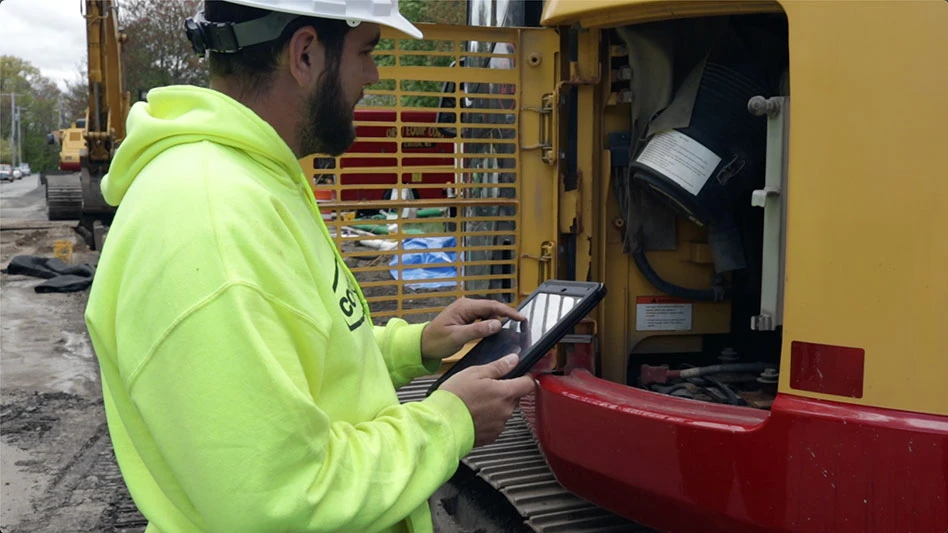
Of course, success isn’t just about buying software and handing out tablets. Company culture and comfort with technology matter, too. The contractors who see the fastest and strongest ROI are those who adapt their maintenance processes to fully leverage the software and commit to a proactive, data-driven approach. The good news: Today’s applications are designed to be user-friendly, even for employees who aren’t especially tech-savvy.
Consider these benefits of a CMMS:
- Automation of preventive maintenance. Once maintenance intervals and requirements are entered, the software system can trigger work orders. Contractors can then bring KPI and warranty tracking, parts inventory management, mechanic payroll integration and other software capabilities online over time and as required.
- Communication across workflows. Managing maintenance processes with software opens up opportunities for online collaboration and visibility that are impossible when that information is on paper or in a maintenance manager’s head. Repair requests, for example, can be received directly from a field tracking application, and managers in the field can track the status of those repairs to better plan how they can use the equipment. Equipment inspections completed with electronic forms can deliver data directly to the maintenance software.
- Scalability. Small companies that don’t intend to stay small can benefit when they implement maintenance software to create a proactive maintenance culture from the outset.
Geofencing technology, when integrated with maintenance, scheduling and tracking software, can form a powerful operational tool. Providing real-time data access to maintenance, dispatch and project management teams enhances efficiency across departments. This seamless flow of information can allow teams to work more effectively and adapt quickly, ensuring projects are completed on time and within budget.
Doug Seyler is vice president of customer success at Trimble, Westminster, Colorado. In his role, he leads implementation services to assist contractors in planning and optimizing software applications for construction.
Latest from Construction & Demolition Recycling
- eFactor3 enters into separation tech partnership
- Mitsubishi Logisnext Americas to rebrand as Logisnext Americas
- Burns Services diverts more than 1.2M tons of C&D materials from landfills
- ING spells out downward copper price pressure
- Oregon lawmakers pass battery recycling bill
- Volvo says loader updates improve efficiency
- Indicators point to hiccups in steel demand momentum
- John Deere launches Extended Reality Training System