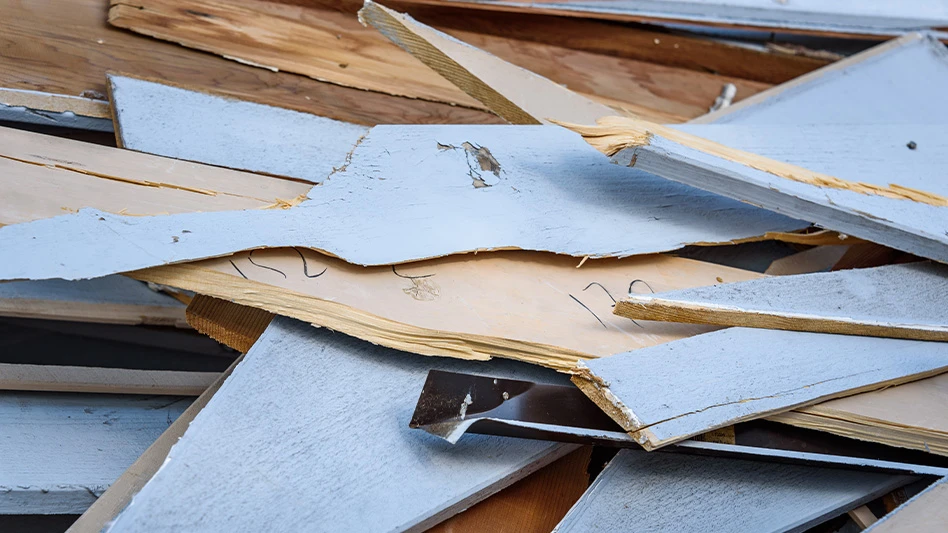
New York State’s Suffolk County District Attorney Thomas Spota has announced the arrests and indictment of six people for their roles in the illegal dumping of toxic construction and demolition (C&D) debris at four locations in Suffolk County. The debris originated from sites in New York City.
In announcing the indictment, Spota says the crimes “paint a portrait of greed and the abuse of power that has left the residents of Islip with an environmental catastrophe.”
During the investigation, which took more than eight months, investigators and prosecutors in New York State’s Economic Crime and Government Corruption Bureaus investigated what Spota called “brazen environmental crimes.” Dangerous toxins, including cobalt, the banned insecticide Dieldrin and asbestos were found at four sites in the county.
The six men indicted are former Islip Parks Commissioner Joseph Montouri Jr. and a former parks colleague, Brett Robinson; Thomas Datre Sr. and his son, Thomas Datre Jr.; Christopher Grabe of Islandia Recycling; and Ronald Cianculli of Atlas Asphalt.
Additionally, four Datre family businesses have been charged over the illegal dumping: 5 Brothers Farming Corp., Daytree at Cortland Square Inc., Datre Family Farms Inc. and DFF Farms Corp.
The investigation began when investigators, informed of a possible dumpsite by police with the New York State Department of Environmental Conservation (DEC) discovered contaminated fill at a soccer field and a recharge basin in Brentwood. The investigation widened to include three other locations in the county where contaminated debris was found: a vacant lot in Central Islip, a six-home development for veterans in Islandia and a lot adjacent to state-protected wetlands in Deer Park.
“Each one of these defendants saw an opportunity to make money and ignore the consequences of endangering the health of thousands of people,” Spota says. “They took truckloads of contaminated demolition and construction debris from New York City and they dumped it here, in their own county, in places where they thought they’d never get caught.
By not going to a landfill or registered waste facility, they avoided paying dumping costs – and the net gain was pure profit,” Spota notes.
Latest from Construction & Demolition Recycling
- Vecoplan to present modular solutions at IFAT 2026
- Terex Ecotec appoints Bradley Equipment as Texas distributor
- Greenwave raises revenue but loses money in Q2 2025
- Recycled steel prices hold steady
- John Deere launches ‘Building America’ excavator contest
- Triumvirate Environmental acquires Environmental Waste Minimization
- Coastal Waste & Recycling expands recycling operations with Machinex
- Reconomy acquires German-based GfAW