Major electrical power plant and sewage treatment projects have injected some hope into the U.S. infrastructure spending scene, although highway spending remains restrained.
September and October 2003 new contract numbers calculated by McGraw-Hill Construction Dodge, New York, reflect the infusion of spending on several major projects, including contracts put in place for three new power plants in September; for a sewage treatment facility in Brooklyn, N.Y., and for a $130 million water line project in Westchester County, N.Y.
Contract spending for the highway segment increased slightly in October, while the sewer and water projects helped lift overall public works spending by 18 percent in the month. The first ten months of infrastructure spending for 2003 still lag behind 2002 by 12 percent, reflecting the sorry fiscal condition of many state governments and the lack of federal highway fund disbursements in 2003 as states await Congressional approval of a new transportation spending bill.
The residential segment, which has been vigorous through most of 2003, remained strong for single-family homes in October, although multi-family building starts dropped 15 percent for the month.
The multi-family drop could be a sign of things to come, according to an F.W. Dodge economist. “The cost of financing is expected to edge upward in coming months,” notes McGraw-Hill vice president Robert A. Murray, “and this will begin to dampen both home buyer demand and housing construction.”
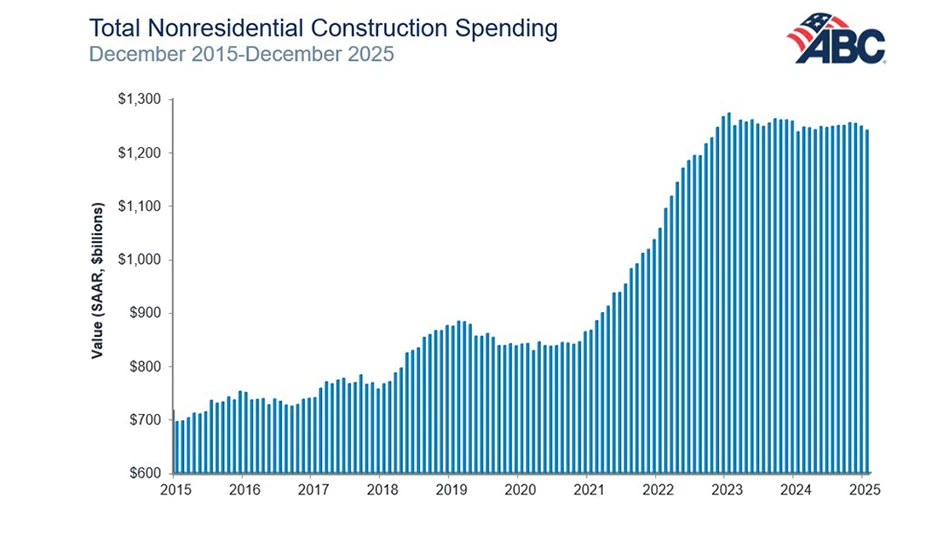
Nonresidential construction enjoyed a healthy autumn, with school construction up 10 percent in October and church construction spending up 5 percent and public building contract values rising 12 percent.
The amusement category rose 86 percent due largely to three high-profile projects: a 175 million casino in California; a $165 million basketball arena in Charlotte, N.C.; and a $125 million performing arts theater in Minneapolis.
Office building and hotel construction remain weak, while a new semi-conductor plant being built in Arizona single-handedly raised depressed industrial construction numbers.
Latest from Construction & Demolition Recycling
- Vecoplan to present modular solutions at IFAT 2026
- Terex Ecotec appoints Bradley Equipment as Texas distributor
- Greenwave raises revenue but loses money in Q2 2025
- Recycled steel prices hold steady
- John Deere launches ‘Building America’ excavator contest
- Triumvirate Environmental acquires Environmental Waste Minimization
- Coastal Waste & Recycling expands recycling operations with Machinex
- Reconomy acquires German-based GfAW