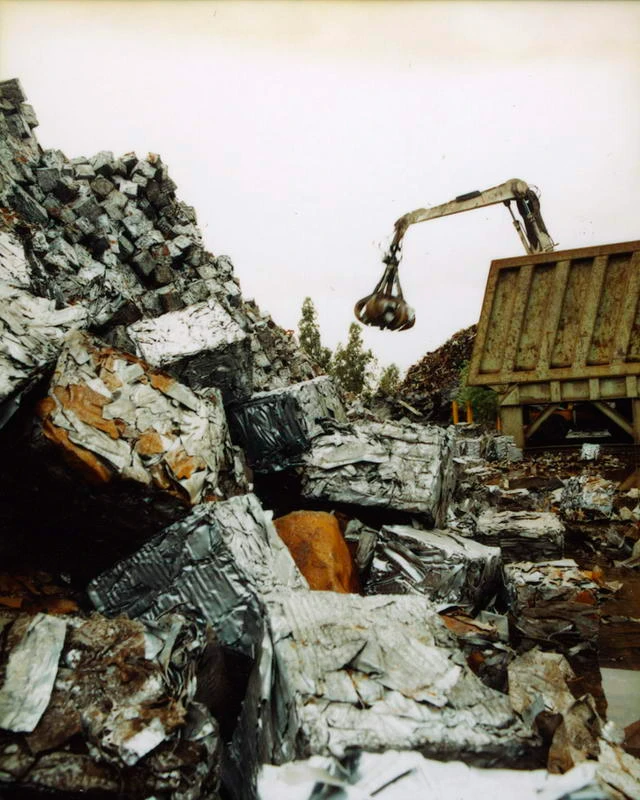
Dealers and processors mostly cited scant supply as the reason driving scrap prices higher on the spot market by about $50 per ton in March.
Mill buyers paid $56 per ton more on average for prompt grades, with prices for shredded scrap and No. 1 heavy melting steel (HMS) rising by slightly less than $50 per ton, according to the statistical summary of February spot buying from the Raw Material Data Aggregation Service (RMDAS), compiled by Management Science Associates’ (MSA), Pittsburgh. (click here to see the totals for the month).
Prompt grades (No. 1 busheling, No. 1 bundles and No. 1 factory bundles) maintained their spread against prices paid for shredded scrap and No. 1 HMS. Nationally, mill buyers paid on average $112 more per ton for busheling compared to No. 1 HMS.
Regionally, spot buyers in the RMDAS South region were able to pay about $40 per ton less for prompt grades, compared to buyers in the other two regions. Pricing paid for the other two grades was more consistent across all three regions.
Recyclers for the most part are reporting disappointing scrap flows, although several have indicated that the flow began to increase in mid-March.
“I can buy whatever I can sell, I just can’t find enough to buy,” said a scrap recycler in the West.
A scrap processor in Texas echoed that sentiment, saying, “There is very little flow. I hear from colleagues in other cities that flow is getting better, but around here there is nothing coming in.”
However, a buyer in the Southeast reported that flows have begun to increase in his region and that he even sees some signs of increased industrial scrap generation. And in the Northeast, a shredder operator remarks, “Our flows right now are the strongest they’ve ever been. Industrial accounts have picked up and stamping plant tonnage has improved in the past month.”
Demolition contractors, who gathered in Las Vegas in March for the National Demolition Association Annual Convention, largely reported that they have several projects lined up for the spring and summer.
Scrap recyclers would welcome the additional flow, as the slow pace of activity in the construction and demolition sectors has been one of the constraints on ferrous scrap supply in the past 12 months.
On the scrap demand side, the world’s steelmakers produced less steel overall in February 2010 than they did in January. In the 66 nations tracked by the WorldSteel Association, Brussels, some 107.5 million metric tons of steel were made in February, down from 113.4 million metric tons the month before.
The February 2010 figure was up significantly from one year ago. In February 2009 just 86.6 million metric tons of steel was made in the WorldSteel 66 nations as industrial production throughout the world was in a trough at that time.
Domestically, raw steel production numbers, compiled by the American Iron and Steel Institute (AISI), continue to reflect a bounce back for the steel industry.
In the week ending March 20, 2010, domestic raw steel production was 1.7 million tons and the capability utilization rate was 71.1 percent.
That compared to a production figure of 980,000 tons in the week ending March 20, 2009, when the capability utilization rate was down to 41.1 percent.
The auto industry in the United States may get part of the credit for renewed steel demand. A Web news report from the Detroit Free Press notes that automotive forecasting firm J.D. Power and Associates is predicting that vehicle sales in the United States will top 1.09 million new cars and trucks in March, a 23 percent increase from March of 2009.