Photo courtesy of Recology
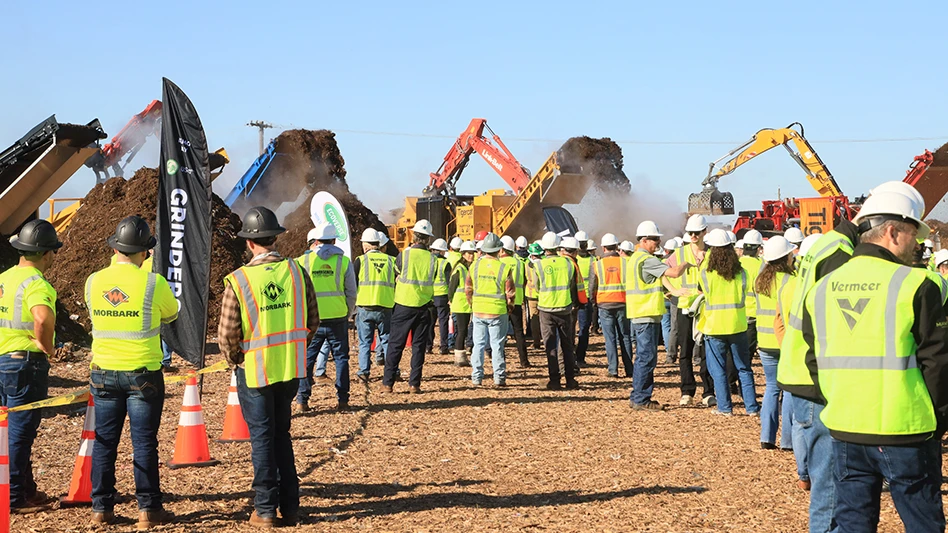
San Francisco-based waste and recycling firm Recology says it hosted nearly 700 people this month at its Recology Ostrom Organics facility in Wheatland, California, near Sacramento.
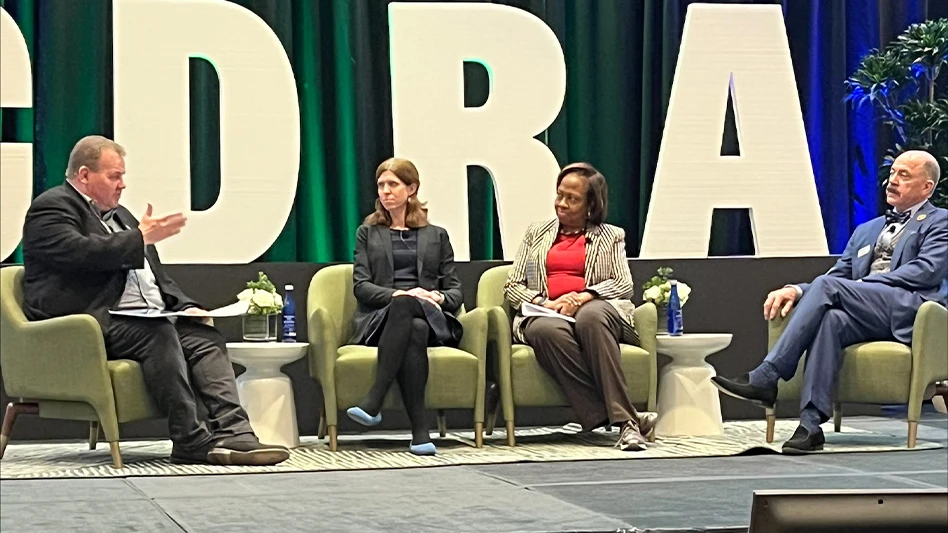
Recology referred to the group as consisting of compost facility managers, vendors and other attendees of the Compost2026 event hosted in Sacramento by the United States Composting Council (USCC).
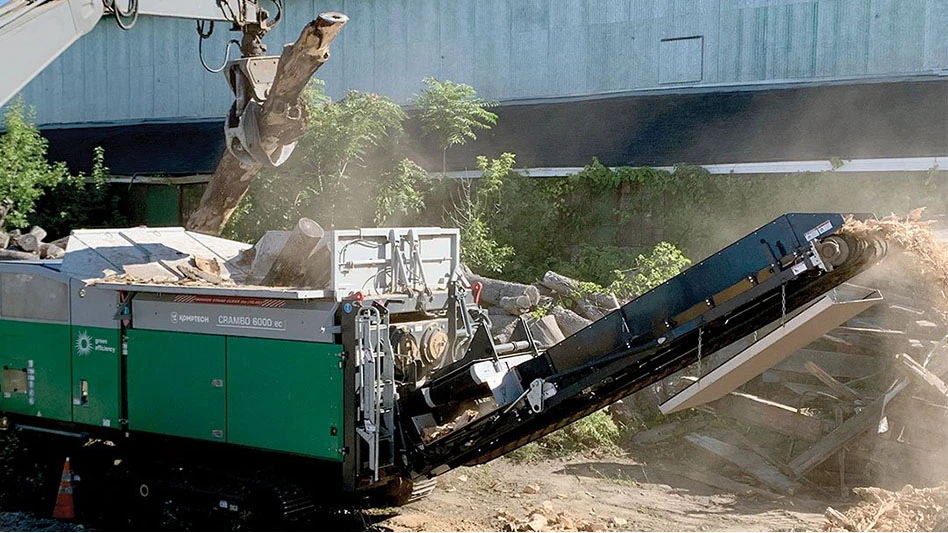
In Wheatland, Recology says it hosted more than 40 machines, including wood grinders, shredders and screens, excavators, loaders, windrow compost turners and solar-powered compost covers, that were provided by 20 equipment manufacturers.
The machines demonstrated their ability to convert yard waste, land clearing debris, food scraps and other organic materials into finished products such as “high-quality dark compost,” says Recology.
“Seeing this tech in action is a game changer for our industry,” says Emma Singleton, marketing coordinator of the North Carolina-based USCC.
Recology says Equipment Demonstration Day, or Demo Day for short, typically closes out the USCC’s annual conference. Singleton said Recology Ostrom Organics was identified as an ideal site to host Demo Day.
The host company refers to itself as having pioneered curbside food scrap collection for composting in San Francisco in 1996, calling San Francisco first large city in the U.S. to collect food scraps together with yard waste such as sticks and leaves for composting.
Hundreds of cities have followed San Francisco’s lead and implemented curbside composting collection programs, says Recology, helping keep compostable materials out of landfills and incinerators, reducing methane emissions, and helping improve soil health on local farms.
“Everyone benefits from composting — local farms, cities and the planet,” said Recology President Cary Chen.
Chen says San Francisco’s curbside composting collection program helped inspire California’s SB 1383, a state law requiring all cities and counties to institute programs that keep compostable materials out of landfills.
Latest from Construction & Demolition Recycling
- Superior adds conveyor dust control features
- MB Crusher at ConExpo
- Reclaiming rebar from concrete with use of a self-cleaning suspended overhead magnet
- Suspended magnet options galore
- European Demolition Association selects Dublin for annual convention
- Are you missing out on money?
- Oregon shopping center could be nearing demolition
- Fraser Valley Junk Solutions expands service availability