Phillips Academy, Andover, Mass., has earned LEED Silver certification from the U.S. Green Building Council (USGBC) for the recent renovation of its 80-year-old dining hall.
The renovation of Paresky Commons dining hall was a 15-month project, according to the school. The Academy and companies involved in the project reused and recycled more than 90 percent of all construction debris generated during the renovation and also have implemented an ongoing recycling program in the dining hall.
“We wanted to earn the LEED rating to certify our considerable sustainable initiatives using an accepted standard,” says Michael Williams, director of facilities and the project’s chief overseer.
Williams says Phillips Academy “has engaged in significant sustainable initiatives in all of our projects for a very long time,” although this was the first LEED certification sought by the school.
Among the dining hall’s upgrades is a food waste pulper-extractor system, which dehydrated and compacted more than 97 tons of organic matter for composting in 2010. Williams credits the system as a primary factor in a 47 percent decrease in the Academy’s incinerated waste from 2007 to 2010.
Since reopening in March 2009, Paresky Commons has served an average of 3,300 meals per day to its about 1,100 students, 225 faculty and family members and 350 staff, making it the largest single energy consumer on campus.
According to Williams, the renovation of the 42,500-square-foot historic structure met and exceeded a number of LEED certification standards, including:
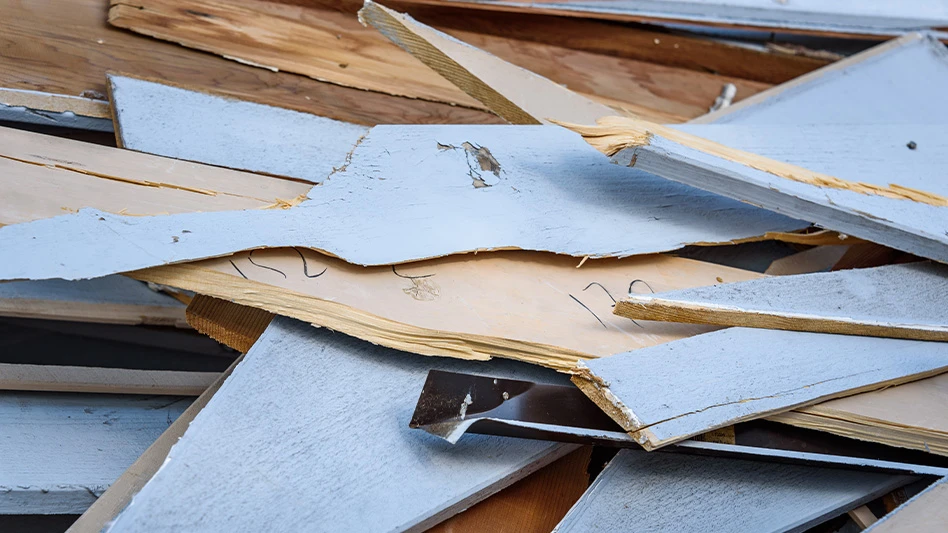
• More than 90 percent of the nearly 1,500 tons of construction, demolition and packaging debris was reused or recycled.
• More than 43 percent of building materials used were manufactured within 500 miles of the site.
• Almost 82 percent of the wood-based materials used derived from socially and environmentally responsible foresters, as certified by the Forest Stewardship Council.
Paresky Senior Food Services Director Paul Robarge says the emphasis on sustainability is also evident in a number of operational changes designed to reduce the facility’s carbon footprint, including:
• The institution of aggressive compacting and recycling of all cardboard, paper and plastic products, resulting in an estimated 1,000 pounds of cardboard alone being recycled each week.
• Recycling of all vegetable oil. (In 2009, 631 gallons of vegetable oil was recycled, resulting in a CO2 savings equal to the planting of 1,163 trees.)
• The use of 100 percent compostable dishes when china or melamine is not an option.
Latest from Construction & Demolition Recycling
- Vecoplan to present modular solutions at IFAT 2026
- Terex Ecotec appoints Bradley Equipment as Texas distributor
- Greenwave raises revenue but loses money in Q2 2025
- Recycled steel prices hold steady
- John Deere launches ‘Building America’ excavator contest
- Triumvirate Environmental acquires Environmental Waste Minimization
- Coastal Waste & Recycling expands recycling operations with Machinex
- Reconomy acquires German-based GfAW