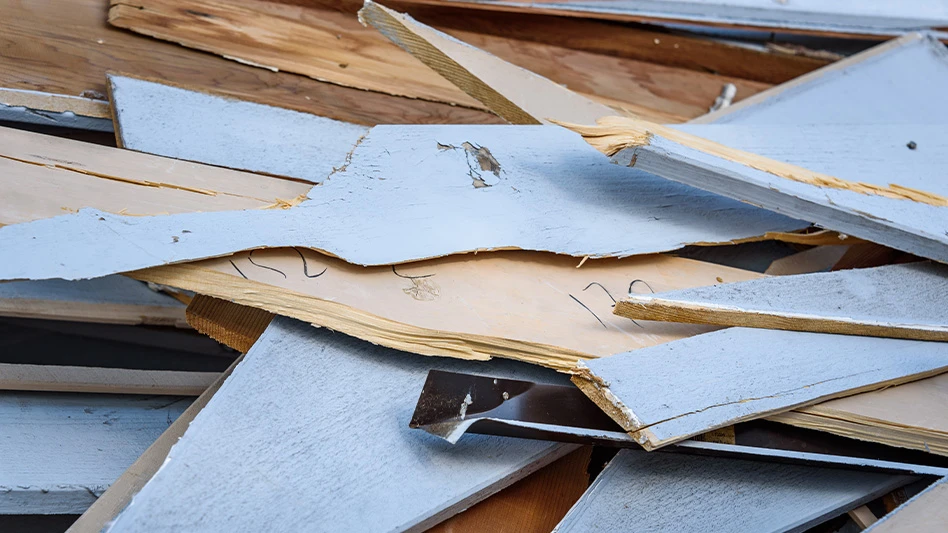
The average leachate values for nine Ohio construction and demolition landfills exceed the primary drinking water standards for arsenic and lead and exceed the secondary drinking water standards for sulfate, iron and manganese, according to tests done by the Ohio Environmental Protection Agency (EPA).
According to the EPA’s findings, the values for cadmium exceed the primary drinking water standard. In addition, the leachate exceeds secondary drinking water standards for aluminum, chloride and total dissolved solids.
According to the report, high levels of contaminants may be leaching out of those landfills. The state’s Construction and Demolition Debris Study Council, which is made up of lawmakers, Ohio EPA officials and industry representatives, has received the report. Among the group’s responses to the report is a possible need to increase the number of tested compounds from 19 to 64 and a general tightening of the controls on C&D landfills, including increasing the setback limits to 1,000 feet of occupied dwellings.
Several environmental groups in the state have used the report to increase pressure for the tighter regulation of C&D landfills. According the Ohio Environmental Council, “This data seriously undermines the industry’s claim that there is no scientific evidence to support stronger controls on construction and demolition waste.”
R Lives Count Too, a new advocacy group, has filed proposed ballot language with the Ohio attorney general to make C&D landfills be treated the same as solid waste landfills that take municipal garbage. The goal is to get the issue on the November 2006 ballot.
Latest from Construction & Demolition Recycling
- Vecoplan to present modular solutions at IFAT 2026
- Terex Ecotec appoints Bradley Equipment as Texas distributor
- Greenwave raises revenue but loses money in Q2 2025
- Recycled steel prices hold steady
- John Deere launches ‘Building America’ excavator contest
- Triumvirate Environmental acquires Environmental Waste Minimization
- Coastal Waste & Recycling expands recycling operations with Machinex
- Reconomy acquires German-based GfAW