Photo by Chris Sweeney
Trade industries around the U.S. are trying to solve the riddle of how to replace a specialized, aging workforce and the demolition is no exception.
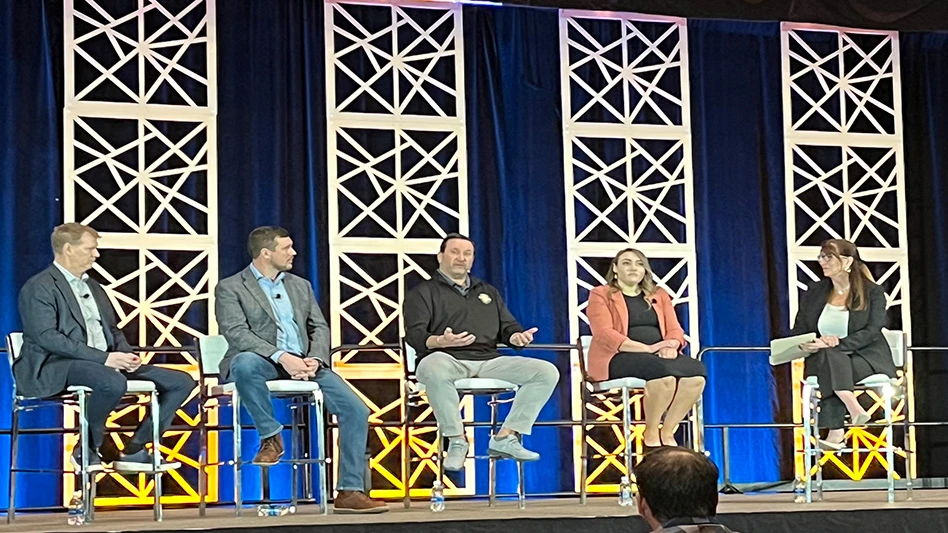
A panel representing a wide-range of different sized companies discussed the challenge of recruiting and developing the next generation of operators and leaders at the National Demolition Association (NDA) Phoenix convention on Feb. 6.
“Our biggest challenge as an industry is the diminishing workforce,” said Drew Earnest, corporate manager at D.H. Griffin Companies. “We have lot of folks retiring and there’s not necessarily someone there to fill those voids.”
Earnest added that operators with wrecking and demolition experience isn’t something that comes fresh out of trade school, college or even after a couple of years on the job. It takes time, so the Greensboro, North Carolina-based company is looking for people who are eager to learn and are willing to invest the time that it takes to gain that experience.
“We recognize that a lot of the folks that are coming out of trade schools or relatively young may not have their experience,” he said. “Maybe they know the controls of a machine, maybe they can load a truck, but that’s not something where we’re going to take and put you in an environment doing what we do on a daily basis because there’s a lot of risk involved. You can follow a plan and work with engineers, but at the end of the day, a lot of what we do has uncertainty, has risk, and that experience that you get with time gives you that confidence, gives you that skill that you need in the cabin.”
Sage Demolition and Land Clearing is one of the smaller demolition companies. Aimee Merrell, owner and business manager with Sage Demolition, said the Salt Lake City-based company has less than 30 employees. She said the key focus for the company is how it can invest in its employees so they can be successful in all areas of their lives so they can come to work and be their best selves.
“We’ve talked about ideas around how can we teach our employees to plan for retirement,” she said. “Can we give them $500 to say, go open a Roth IRA. We’ll teach you how to do it. Or maybe it’s finding ways to invest in their physical health. That’s kind of where we’re at right now.”
Al Gorick, president of Gorick Construction Co. Inc., said the demolition industry is still fighting a perception that the blue collar route is not the way to go, adding that for years people pushed their children gain a college education.
His firm, based in Binghamton, New York, works with the local trades to provide internship programs to show students what construction and demolition work is all about.
“That’s been a nuance that’s gone against us in an industry, and us personally,” he said. “But I think we’ve really adopted the idea of the trades are never going to go away, whether it’s a plumber or a carpenter or these types of things, are never going to go away. And I think the idea is to really let these high school kids know college isn’t for everybody. You can have a great career in what we do and not have the debt.”
Chad Bixby, growth industries manager at Caterpillar Inc., echoes Gorlck’s sentiment that there’s a perception against blue collar work that needs to be changed.
“We have had 56 years of go to college, go white collar, and you’re going to be successful,” Bixby said. “That narrative is false. The blue-collar trades typically make a lot more money than college.”
Bixby added Irving, Texas-based Caterpillar spends a lot of time educating kids before they get to high school, sometimes as early as fifth grade. The firm will bring toys and other items that kids can get their hands on and will host demo days so both the kids and parents can see their equipment first-hand.
Claudia St. John, president of the Workplace Advisors, moderated the panel endorsed this kind of outreach. Her company, based in Jamesville, New York, brings experience working with a variety of associations facing this issue, and the most successful ones are trying to win the hearts of the kids that are in elementary school.
The companies that make the most impact on children are the ones that allow them to see things first hand.
“That’s how you’re winning hearts and minds,” St John said. “By creating that opportunity, if you bring a piece of equipment into a community, that will allow them to check it out. That’s pretty cool. We’re going to think about that for a long time.”
Latest from Construction & Demolition Recycling
- Construction unemployment rate decreases slightly in December 2025
- HCT reports receptive market for upgrade kits
- Al-Jon veteran staff member announces retirement
- Disposal King expands services into South Okanagan
- Murphy Tractor partners with Humdinger Equipment
- NDA Phoenix: Top demolition projects honored at awards banquet
- Greenwave appoints chief financial officer
- NDA welcomes six new directors at 2026 convention