Matthew I stock.adobe.com
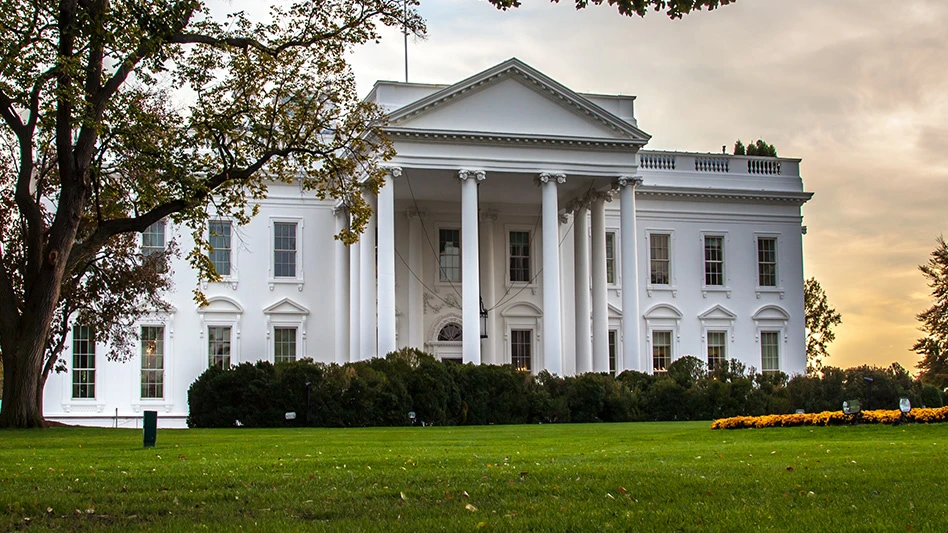
The National Trust for Historic Preservation filed a lawsuit n Dec. 12 in the U.S. District Court for the District of Columbia asserting that ongoing construction of the White House ballroom is unlawful and asking the court to halt further construction activities until the government complies with the law by going through the legally mandated review processes, including a public comment period.
The organization, which was chartered by Congress in 1949 to facilitate public participation in the preservation of sites of national significance, named various individuals and agencies of the government in its lawsuit. The filing claims that construction has commenced even though plans have not yet been filed with the National Capital Planning Commission as required by the National Capital Planning Act.
The National Trust is currently the sole plaintiff in this case and has retained Foley Hoag as outside counsel.
“The White House is arguably the most evocative building in our country and a globally recognized symbol of our powerful American ideals,” National Trust President and CEO Carol Quillen says. “As the organization charged with protecting places where our history happened, the National Trust was compelled to file this case.”
The lawsuit also claims that no adequate public environmental assessment or Environmental Impact Statement has been prepared as required by the National Environmental Policy Act (NEPA) and Congress has not yet authorized construction of the building as it is required to do when construction is proposed in any federal park in the District of Columbia (the White House sits in The White House and President’s Park).
In addition, the filing argues that the president, in disregarding these laws, is violating the Property Clause of the Constitution, which reserves to Congress the right to dispose of and make all rules regarding property belonging to the U.S.
“Submitting the project to the National Capital Planning Commission for review protects the iconic historic features of the White House campus as it evolves,” Quillen says. “Inviting comments from the American people signals respect and helps ensure a lasting legacy that befits a government of the people, by the people, for the people.”
In mid-October, the National Trust submitted a letter to the National Capital Planning Commission, the National Park Service and the Commission of Fine Arts calling for a pause in construction until the legally mandated review processes were completed.
In its letter, the National Trust acknowledged the utility of a larger meeting space, but raised concerns that the massing and height of the proposed new construction would overwhelm the White House itself and permanently disrupt its carefully balanced classic design, citing the Secretary of the Interior’s Standards for Rehabilitation, which offer clear guidance for construction projects affecting historic properties.
The organization says its concerns went unaddressed, adding that it stands ready to assist the necessary organizations in exploring design alternatives or modifications that would accomplish the objectives of the administration while preserving the historic integrity and symbolism of the White House.
Latest from Construction & Demolition Recycling
- Vermeer announces plan to build new facility in Des Moines metro area
- Capstar Disposal expands roll off dumpster rental services
- Supreme Court strikes down IEEPA tariffs
- Casella details facility closures, expansion efforts
- DPR Construction cuts ribbon on Silicon Valley office, prefab facility
- Constellium posts record Q4 adjusted EBITDA
- Amrize closes PB Materials acquisition
- QCC torches include customizable features