Tada Images | stock.adobe.com
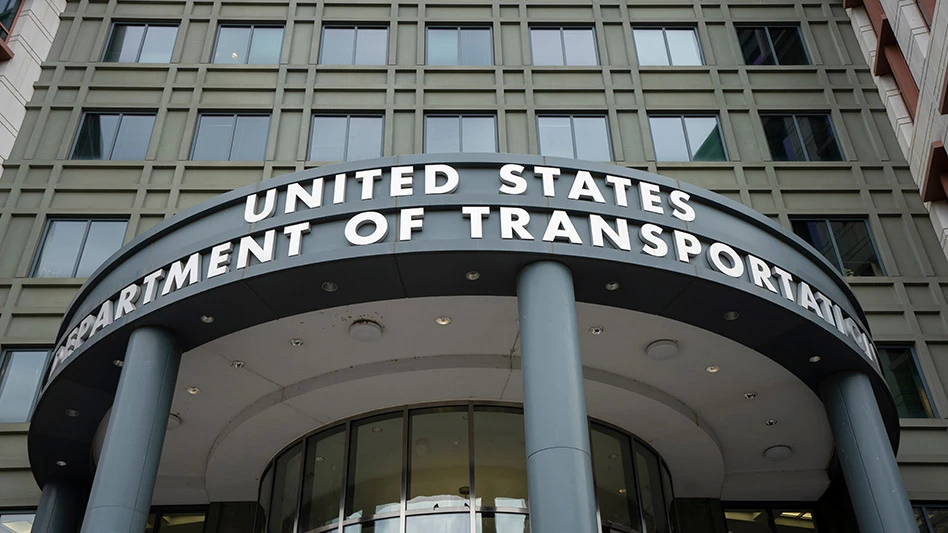
U.S. Secretary of Transportation Sean Duffy welcomed construction and transportation industry trade groups to U.S. Department of Transportation (USDOT) headquarters July 17 for a closed-door, policy-focused roundtable on shared highway reauthorization priorities.
Deputy Secretary Steven Bradbury and Special Advisor and nominee for Federal Highway Administrator Sean McMaster accompanied Duffy in the meeting.
Audrey Copeland, president and CEO of the National Asphalt Pavement Association (NAPA), was invited to offer the industry’s input and perspectives on USDOT priorities.
The roundtable preceded a public meeting Thursday afternoon in which Duffy laid out the agency’s goals and engaged state DOTs. Thursday’s events followed a similar closed-door meeting last month between NAPA and Duffy.
“What we want to do is collaborate with all of you on four key pillars,” Duffy said in the public event called America Is Building Again. “We want to enhance safety, accelerate project delivery…increase opportunity, and we have to strengthen our partnerships.”
“The push for safety, innovation and efficiency—from all sides—bodes well for the asphalt pavement industry,” Copeland said. “Our shared interests reflect NAPA’s strategic plan and our longstanding investments in pavement engineering, health and safety, and advocacy.
“We know there are great opportunities to advance key industry policies like enhancing work zone safety, expanding deployment of RAP [recycled asphalt pavement] mixtures for cost savings and encouraging contractor innovations throughout the project delivery process to boost value and speed of construction. NAPA is proud to lead on these issues, especially as they align with USDOT priorities, and we are excited to work with Secretary Duffy and his team in the months and years ahead.”
Duffy and Bradbury emphasized the Transportation Department’s mantra to get back to basics. According to Duffy, that means formula funding because it’s “the most efficient way to get the money to the states” and permitting reform to enable projects to move faster.
Also speaking at the public event, House Transportation & Infrastructure Committee Chairman Sam Graves promised a bipartisan surface infrastructure reauthorization bill, already in development with 11,000 requests from stakeholders.
Additionally, the agency and Congress are issuing a “request for ideas,” or RFI, as Bradbury put it, which is published at Highways.DOT.gov/RFI-Surface-Transportation-Reauth.pdf. NAPA will share its priorities, as it did during Congress's stakeholder feedback process, and industry is invited to submit its ideas at regulations.gov.
Graves added an important note, mirroring his remarks to attendees of NAPA’s 2025 Annual Meeting on an issue NAPA has long supported: “We have to fix the Highway Trust Fund.” In addition to increasing its efficiency, “EVs are simply not paying for the use of the road.”
Fixing the Highway Trust Fund, or HTF, is an issue NAPA has long led on. In the past year, NAPA has played a stronger role in advocating for solutions to ensure HTF’s financial solvency.
“Our priorities leading up to the next surface transportation reauthorization are down to earth and absolutely attainable,” NAPA Vice President for Government Affairs Nile Elam said. “They include expanding investment and federal policy to ensure a safe work environment for road crews, enshrining Buy America exemptions to protect the construction material supply chain in all corners of the United States and streamlining federal policy, including permitting reform, to enable the roadbuilding industry to deliver the roads and bridges that are the backbone of this country.
Elam underscored that “every one of those priorities relies on fixing the Highway Trust Fund.”
“NAPA testified before the T&I Committee this spring on having all users contribute to the HTF,” he adds. “As Congressman Graves pointed out, ensuring EV owners pay their fair share is one significant way to increase revenue to the HTF for the first time in 30 years.”
McMaster closed the public event by offering comments that align with NAPA’s priorities and promising increased stakeholder engagement to develop and deploy projects that serve taxpayers efficiently. “The goal is to empower state DOTs to manage their own projects and remove red tape while also cutting unnecessary delays and costs.”
Asphalt pavement is used to surface more than 94 percent of the nation’s roadways and is the country’s most recycled product, according to NAPA, saving state DOTs more than $4.5 billion annually. As such, NAPA will continue collaborating with USDOT to enable rapid deployment, particularly of time- and cost-saving measures such as innovative technologies, project execution, and recycled materials.
Latest from Construction & Demolition Recycling
- Sybilion seeks to help manufacturers confidently address volatility
- Construction backlog rebounds in February
- USTR to study additional steel, aluminum tariffs
- Shawmut commemorates National Women in Construction Week
- Holcim expands presence in Colombia with agreement to acquire Cemex operations
- eFactor3 enters into separation tech partnership
- Mitsubishi Logisnext Americas to rebrand as Logisnext Americas
- Burns Services diverts more than 1.2M tons of C&D materials from landfills