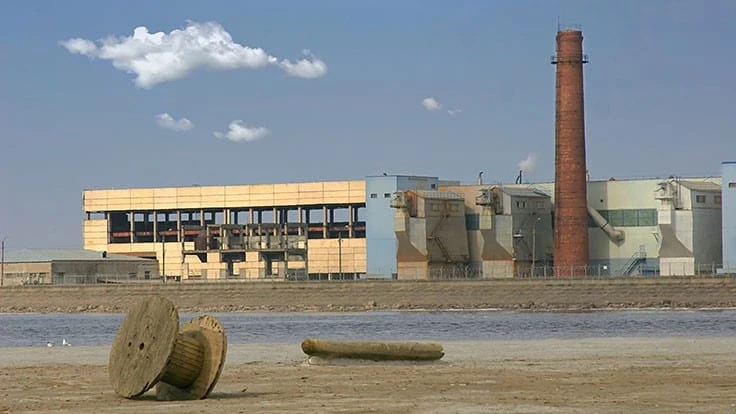
Amendments to the Michigan Brownfield Act (Act 381) may boost brownfield redevelopment activity in that state by providing easier access to the Wolverine State’s tax increment financing incentive.
An update posted by Brighton, Michigan- based ASTI Environmental to its website says the changes may be especially helpful to allow smaller projects to proceed.
Writes the firm, “Building on a brownfield site typically incurs additional costs (assessment, remediation, demolition, unstable soils, unanticipated conditions, delays for approvals, etc.) that can be offset to some extent by local, state and federal incentives.”
ASTI calls tax increment financing “one of the most common” methods to make such projects feasible despite the added costs, and adds, “Recent changes to the tax increment financing incentive in Michigan will make portions of this program more accessible for transformational projects.”
The changes in Michigan pertain to Transformational Brownfield Plans (TBPs) generally required for developers to access tax benefits. The five main changes, says ASTI, are: 1) TBPs no longer require developments to be mixed use; 2) a prior “demonstration of substantial benefit to the state” has been removed; 3) a threshold requiring third-party underwriting has been increased from $1.5 million to $10 million in “tax capture per year;” 4) other incentives, such as the Community Revitalization Program, can now be combined with a TBP; and (5) legislation that had been set to expire at the end of this year has been extended to 2027.
ASTI says the changes are likely to be welcome by developers of smaller projects, and thus could lead to more demolition and site preparation work. “Removal of the requirement that a TBP demonstrate an overall positive fiscal impact to the state based on third-party underwriting is perhaps the most substantial change,” writes the firm. “For smaller projects, this was a difficult and costly demonstration to prepare, requiring two independent reviews. With this change, more developers, especially in smaller communities, should now be able to effectively prepare an application for the TBP.”
Latest from Construction & Demolition Recycling
- Vecoplan to present modular solutions at IFAT 2026
- Terex Ecotec appoints Bradley Equipment as Texas distributor
- Greenwave raises revenue but loses money in Q2 2025
- Recycled steel prices hold steady
- John Deere launches ‘Building America’ excavator contest
- Triumvirate Environmental acquires Environmental Waste Minimization
- Coastal Waste & Recycling expands recycling operations with Machinex
- Reconomy acquires German-based GfAW