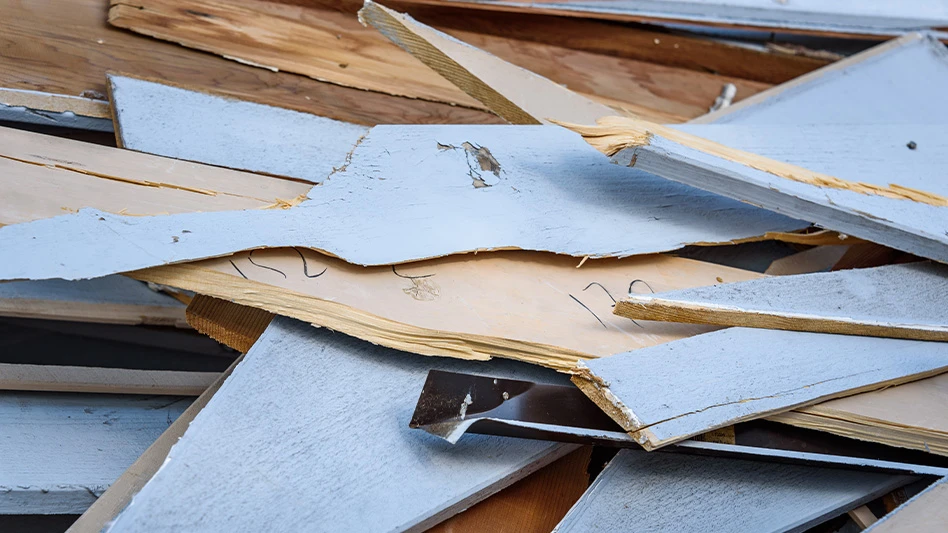
The Concord Monitor has reported that Bio Energy, Hopkinton, N.H., burned wood from construction and demolition debris and released an unknown amount of lead into the air during a three-month period in 1995, according to state documents.
The company, a wood-burning electricity producer, did not have a permit to burn construction and demolition material at the time, according to New Hampshire Department of Environmental Services spokesman Jim Martin.
It obtained a permit that allowed the burning of construction and demolition debris and lead emissions of up to 2.67 tons of lead per year in 2003, says Martin.
The Monitor reports that painted wood chips were accidentally mixed in with the clean wood in 1995, according to the company.
“There’s no indication that they were knowingly burning this material,” Martin says.
Bio Energy opened in 1984 as the state’s first stand-alone cogeneration plant, burning wood chips to generate electricity and steam, according to the company’s Web site.
A monthly ash test in September 1995 revealed high levels of lead, almost three times the 700 milligrams per kilogram state limit, according to the Monitor.
The limit qualified Bio Energy to spread ash over landfills and farms, says Martin.
Bio Energy spokesman Paul Young tells the Monitor that the company did not accept painted wood and the source of the lead was never found.
According to the Monitor, state officials credited the tainted wood to Brooklyn, N.Y.-based supplier Star Recycling, which processed construction and demolition debris.
After the 1995 test, Bio Energy immediately stopped taking material from Star Recycling and submitted to bi-weekly ash checks, all of which came back clean, says Martin.
Martin says several groups are expressing concerns over the incident. Some are even trying to stop Bio Energy from operating.
“This is a giant political, emotional and legal issue,” he says.
A petition from residents asking the DES to revoke Bio Energy’s operating permit is just one of many pieces of litigation resulting from the 1995 oversight, according to Martin.
He says the DES plans to investigate further.
“This will probably be an issue for years,” he says.
Latest from Construction & Demolition Recycling
- Vecoplan to present modular solutions at IFAT 2026
- Terex Ecotec appoints Bradley Equipment as Texas distributor
- Greenwave raises revenue but loses money in Q2 2025
- Recycled steel prices hold steady
- John Deere launches ‘Building America’ excavator contest
- Triumvirate Environmental acquires Environmental Waste Minimization
- Coastal Waste & Recycling expands recycling operations with Machinex
- Reconomy acquires German-based GfAW