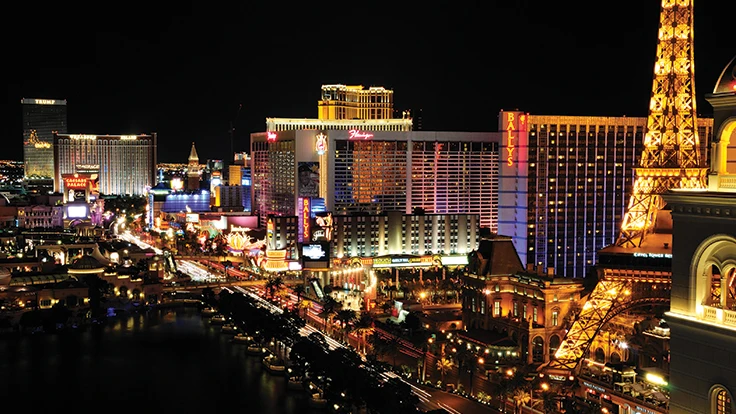
Las Vegas Sands Corp., a property owner and developer in Las Vegas, is using Envy Walls during The Palazzo casino renovation, a blog post by Las Vegas Sands says. Envy Walls, Flint, Michigan, is a manufacturer of temporary wall made of 100 percent recyclable and reusable materials. The post says every 700 square feet of Envy Walls' product reduces one ton of landfill debris compared to conventional framing, metal studs and dry wall.
“Sustainability at its core was developed to do what its name implies—to sustain life or increase longevity of life,” Tim Brown, senior program manager of corporate development at The Venetian and The Palazzo, says in the blog post. “For sustainable buildings, it means they last longer with reduced operating and maintenance costs. For individuals working in sustainable buildings, it means they can breathe cleaner air which can reduce sickness and ultimately increase one’s lifespan.”
The temporary walls for projects are constructed with less labor, saving tens of thousands in costs, while reducing construction waste by almost 30 tons in 2017 alone, the blog post says.
“That is something I’m very proud of, but it was only made possible by the input and joint effort of Venetian facilities and my development department,” Brown says in the blog post. “Though sustainable practice has always been a part of development’s project criteria, improvements can always be made. Early this year, we set out to engage sustainability with the expressed intent to improve our partnership in project delivery but more importantly to promote discussion and feedback on how we as a department can improve the sustainable practices currently in place.”
With renovations to last until June 2018, the walls not only reduce debris, but also help with air quality as there are no airborne pollutants caused by drywall installation and sanding, according to the blog. They also eliminate use of drywall mud, primer and paint. With the reduction of construction waste and increasing recycling rate, 100 percent diversion of construction debris generated was from the use of the temporary walls.
“One of the easiest ways to ensure sustainability initiatives are properly documented is to use contractors and designers who are experienced in delivering sustainable projects,” Brown says in the post. “Projects move quickly through construction and contractors unfamiliar with the additional documentation necessary for sustainable projects will not prioritize that requirement. The key is intentionally to be purposefully sustainable.”
Latest from Construction & Demolition Recycling
- Vermeer announces plan to build new facility in Des Moines metro area
- Capstar Disposal expands roll off dumpster rental services
- Supreme Court strikes down IEEPA tariffs
- Casella details facility closures, expansion efforts
- DPR Construction cuts ribbon on Silicon Valley office, prefab facility
- Constellium posts record Q4 adjusted EBITDA
- Amrize closes PB Materials acquisition
- QCC torches include customizable features