December of 2003 followed a similar pattern cut earlier in the year: the residential housing segment remained healthy while other construction sectors struggled to make gains.
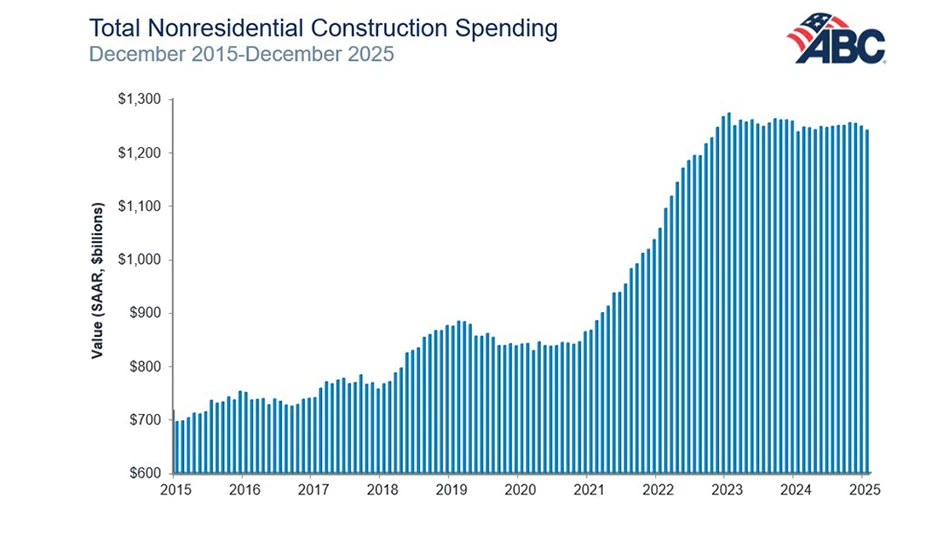
Figures calculated by McGraw-Hill Construction Dodge, New York, showed that Americans were willing to buy new homes in 2003, but office, industrial and infrastructure construction activity declined for the year.
“The overall level of construction activity was quite healthy during 2003, thanks to the robust volume of single family housing,” says Robert A. Murray, vice president of economic affairs for McGraw-Hill Construction. “At the same time, it was a different picture for construction’s other sectors. The tough fiscal climate in 2003 dampened institutional building, and caused public works to lose momentum after four straight years of expansion. Commercial building in 2003 weakened further, but on the plus side this sector showed it was turning the corner, as gains for stores and hotels partially offset declines for offices and warehouses. Moving into 2004, continued growth for total construction will require more broad-based improvement from commercial building, since it’s expected that single family housing will ease back from its exceptional 2003 pace.
The residential slow down that Murray forecasts may have started in December, as new residential contract numbers remained flat compared to the month before. The overall residential number concealed a divide between single-family home building, which advanced by 3 percent, compared to multi-family (often speculative) housing starts, which retreated by 19 percent compared to the month before.
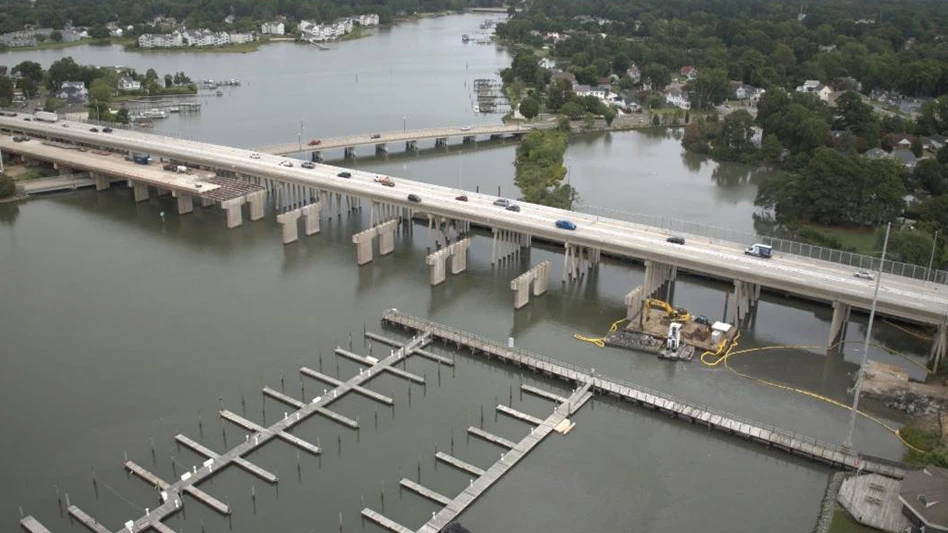
A much-needed boost in the infrastructure segment (which includes highway projects) might be further delayed as Congress wrestles with finalizing a multi-year transportation spending bill.
Latest from Construction & Demolition Recycling
- Greenwave raises revenue but loses money in Q2 2025
- Recycled steel prices hold steady
- John Deere launches ‘Building America’ excavator contest
- Triumvirate Environmental acquires Environmental Waste Minimization
- Coastal Waste & Recycling expands recycling operations with Machinex
- Reconomy acquires German-based GfAW
- CommanderAI launches HaulerCentral database
- Glass Recycling Foundation releases 2025 Impact Report