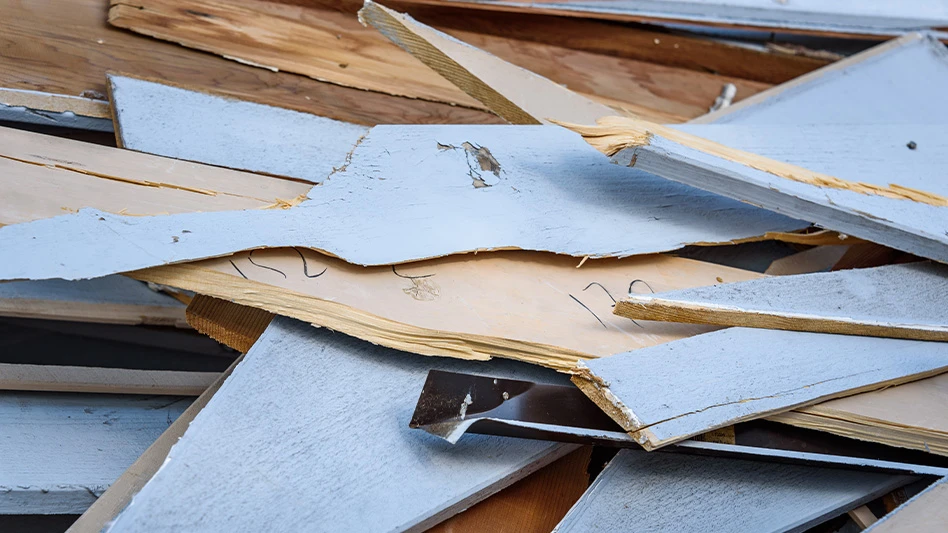
The management of construction and demolition debris is a huge component of the green building movement, according to Wes Sullens of Alameda County, Calif.-based StopWaste.org, who moderated a session entitled Waste Not at the Greenbuild Expo held recently in Chicago.
Approximately 21 percent of the waste stream in
Such a large material stream translates into significant recycling opportunities and earning Leadership in Energy and Environmental Design (LEED) points for contractors looking for green building certification, he said. While recycling offers measurable upstream and downstream savings, cultivating markets for some material can be a challenge. “Finding markets for C&D is where we need to go,” said Sullens.
Richard Ludt of Interior Removal Specialist Inc.,
Commercial interior jobs also often have still functioning fixtures and usable furniture to deal with, Ludt said. With commercial interior jobs, Ludt said it’s even more important for contractors to focus on markets before the demolition even starts. “Look at what you can recover before you start,” he said.
Markets exist for materials like drywall and ceiling tiles, but they might be harder to find than those for scrap steel and concrete, he added. He advised contractors to source separate as much as possible.
Richard Chien from the San Francisco Department of the Environment also addressed attendees of the session and updated them on the city’s efforts to improve C&D recycling.
The city approved a C&D recycling ordinance in 2004 that took effect in the summer of 2006 to help
Chien said the city did a waste characterization study in 2005, which showed 15 percent of the material going into landfills was C&D debris, making that material “an important part of the equation,” in reducing total waste, he said.
Also speaking on the panel was Michael Pawlyn, a consultant with U.K.-based Grimshaw Architects. Pawlyn discussed his firm’s involvement in projects that draw inspiration from nature. “Generally, we have a very linear, wasteful approach to resources,” Pawlyn said. His firm’s projects aim to reflect a more natural, closed-loop approach to the use of resources, “where waste from one part of the system becomes nutrients for another.”
The Greenbuild Expo was held Nov. 7-9 in
Latest from Construction & Demolition Recycling
- Greenwave raises revenue but loses money in Q2 2025
- Recycled steel prices hold steady
- John Deere launches ‘Building America’ excavator contest
- Triumvirate Environmental acquires Environmental Waste Minimization
- Coastal Waste & Recycling expands recycling operations with Machinex
- Reconomy acquires German-based GfAW
- CommanderAI launches HaulerCentral database
- Glass Recycling Foundation releases 2025 Impact Report