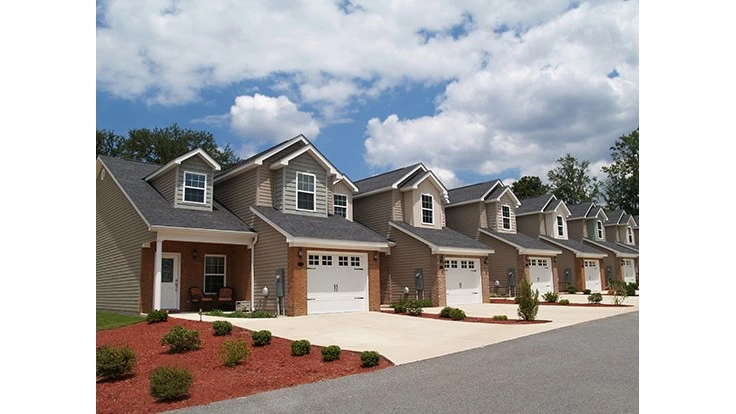
The state of Georgia’s Department of Community Affairs (DCA) has recently approved its 2019 Qualified Allocation Plan (QAP), which now requires all projects seeking to qualify for certain housing tax credits to earn a sustainable building certification. LEED is one such option, says the U.S. Green Building Council (USGBC).
Each year, housing finance agencies in each U.S. state review and revise their QAPs, which help determine which affordable housing projects will qualify to receive Low-income Housing Tax Credits (LIHTCs), as allocated by the Internal Revenue Service (IRS) based on each state’s population.
Under the terms of Georgia’s 2019 QAP, sustainable building certification is now considered a mandatory requirement for projects. To comply, projects that apply must obtain a building certification, such as LEED Homes, or one of several other certification options. The QAP notes that in addition to meeting sustainable building certification, a project must engage in tenant and building manager education in compliance with the chosen program.
These changes are consistent with the 2019 strategic goals of the DCA, as outlined in the QAP. Among the DCA’s objectives for housing are better health outcomes for residents through thoughtful site selection and site design—each of which are goals supported by LEED certification, USGBC says. DCA also encourages project innovation in 2019 through efficient and sustainable building strategies, many of which are required of LEED projects, adds USGBC.
Previously, Georgia’s QAP offered sustainable building certification as a voluntary option for projects to earn points under the plan’s competitive scoring criteria. The 2018 plan offered a tiered point allocation for certified projects, with more points available to projects that certify to a higher level. In particular, projects certified under LEED Homes projects could earn one point, and those achieving LEED Platinum could earn three points.
By requiring applicants to meet a green building certification, Georgia will help more low-income housing residents benefit from sustainable, efficient and resilient housing, USGBC says. In a press release, USGBC congratulated Georgia in taking this step in helping to ensure green housing for all, as the state has historically been recognized as a leader for LEED. In 2017, Georgia was named one of the Top 10 States for LEED, with 71 projects certified, amounting to more than 23.6 million square feet of LEED space.
Latest from Construction & Demolition Recycling
- Greenwave raises revenue but loses money in Q2 2025
- Recycled steel prices hold steady
- John Deere launches ‘Building America’ excavator contest
- Triumvirate Environmental acquires Environmental Waste Minimization
- Coastal Waste & Recycling expands recycling operations with Machinex
- Reconomy acquires German-based GfAW
- CommanderAI launches HaulerCentral database
- Glass Recycling Foundation releases 2025 Impact Report