Photo from C&DR photo archives
The U.S. Environmental Protection Agency has announced a $4 million grant to the city of Seattle for a solid waste infrastructure project.
Funding for the grant comes from the Solid Waste Infrastructure for Recycling grant program, authorized by the Save Our Seas 2.0 Act and funded through the Bipartisan Infrastructure Law.
Seattle is one of two communities in the Pacific Northwest to be awarded a SWIFR grant.
“One of our greatest responsibilities is to steward our environment and its natural resources by advancing meaningful climate actions through our investments, policies and practices. Our sustainability efforts are reducing our carbon footprint, diverting waste from landfills and prolonging the life cycle of our natural materials, creating a more resilient environment and healthier communities,” says Mayor Bruce Harrell. “Through these federal dollars, we are investing into our circular wood economy, creating new green jobs for our workforce and advancing our climate goals.”
EPA Region 10 Administrator Casey Sixkiller adds, “Through the Bipartisan Infrastructure Law, we are expanding federal funding for local and tribal priorities that improve environmental health. These funds will help advance innovative recycling services, resulting in good-paying jobs and repurposing useful resources that would otherwise end up in landfills.”
RELATED: A new market for wood
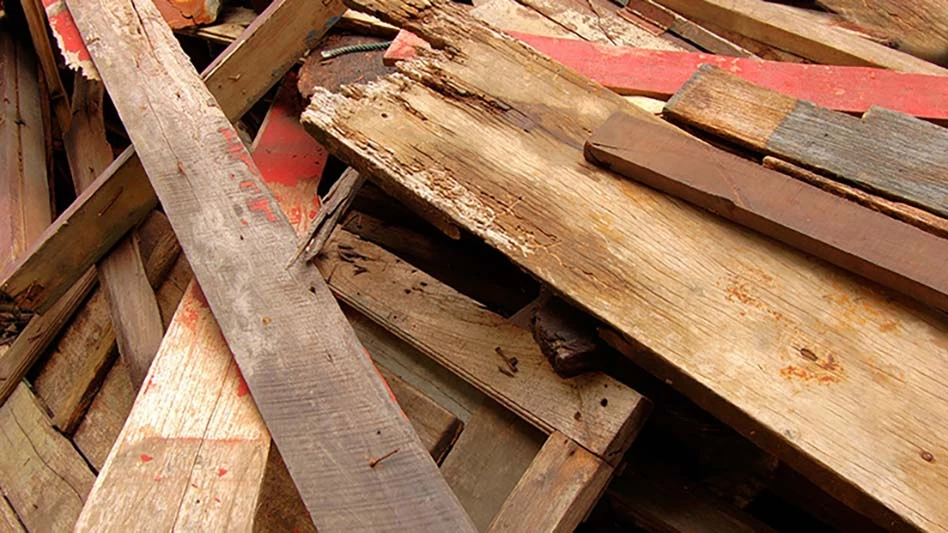
This federal grant will support Seattle’s circular wood economy by developing a new salvaged wood warehouse to process, store, organize and distribute salvaged wood, aligning with Seattle Public Utilities’ goal to achieve zero waste.
Nearly 17 percent of Seattle’s construction waste comes from home demolitions, and since many Pacific Northwest homes are primarily constructed with wood, diverting wood for reuse can make a real difference.
When homes are simply demolished, wood from the homes is typically landfilled or burned for energy, releasing carbon into the environment. However, deconstructing homes and salvaging the wood for new uses reduces carbon emissions and the need for cutting down additional trees for new wood, resulting in climate benefits and waste prevention, the city says.
Once operational, the new salvaged wood warehouse is expected to process 150 tons of salvaged wood annually.
“The Office of Sustainability and Environment (OSE) is excited to be working as One Seattle with Seattle Public Utilities and other city departments to pursue innovative climate solutions that reduce pollution, create local sustainable jobs and boost the economy,” says OSE Director Jessyn Farrell. “As we move toward net zero emission buildings, we must consider the climate impacts of the materials we use in our buildings when we construct, remodel, and take down buildings.”
Latest from Construction & Demolition Recycling
- Vermeer announces plan to build new facility in Des Moines metro area
- Capstar Disposal expands roll off dumpster rental services
- Supreme Court strikes down IEEPA tariffs
- Casella details facility closures, expansion efforts
- DPR Construction cuts ribbon on Silicon Valley office, prefab facility
- Constellium posts record Q4 adjusted EBITDA
- Amrize closes PB Materials acquisition
- QCC torches include customizable features