The Boston and Maine Corporation agreed to pay a $17,050 penalty to the Massachusetts Department of Environmental Protection for violating state asbestos regulations during demolition activity in Gardner, Mass.
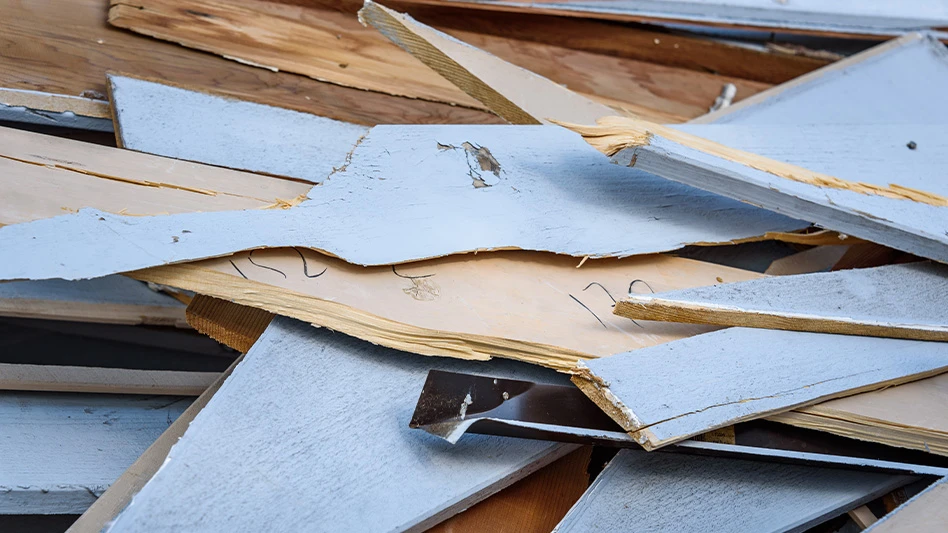
DEP asbestos inspectors observed dry, friable, uncontained asbestos insulation and asbestos-containing thermal paper mixed throughout demolition and fire debris. B&M authorized the demolition activity and handling of the asbestos-containing fire debris without notifying DEP or ensuring that the asbestos-containing waste materials were properly handled, packaged, labeled and stored as required by the regulations.
Upon discovery of the violations, B&M was required by DEP to hire a Department of Labor and Workforce Development, Division of Occupational Safety, licensed asbestos contractor to properly remove all the asbestos-contaminated fire and demolition debris.
As part of the settlement, DEP agreed to suspend $7,050 of the penalty provided that B&M fulfills the terms of a Supplemental Environmental Project. The SEP requires B&M to retain the services of an independent asbestos consultant to conduct an asbestos-related public awareness forum in the City of Gardner to provide information to local residents, contractors, and officials about asbestos health hazards and the asbestos regulations. Additionally, the SEP requires B&M to retain the services of an independent asbestos consultant to prepare an asbestos operations and management policy for use at all its Massachusetts facilities and to provide asbestos awareness training to all relevant employees working in the Commonwealth.
Latest from Construction & Demolition Recycling
- Vecoplan to present modular solutions at IFAT 2026
- Terex Ecotec appoints Bradley Equipment as Texas distributor
- Greenwave raises revenue but loses money in Q2 2025
- Recycled steel prices hold steady
- John Deere launches ‘Building America’ excavator contest
- Triumvirate Environmental acquires Environmental Waste Minimization
- Coastal Waste & Recycling expands recycling operations with Machinex
- Reconomy acquires German-based GfAW