Photo by Mark Campbell
The million-dollar question for most companies in the environmental services sector is: How to access capital?
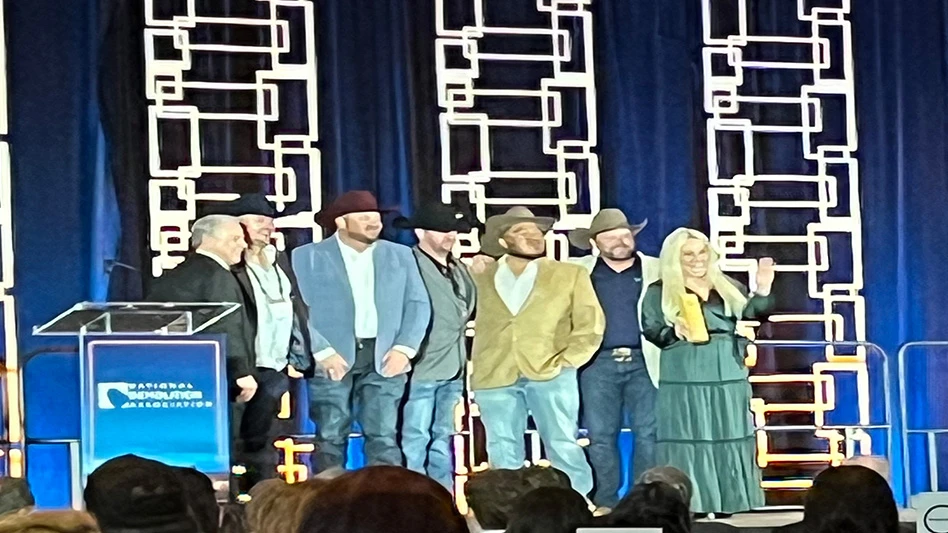
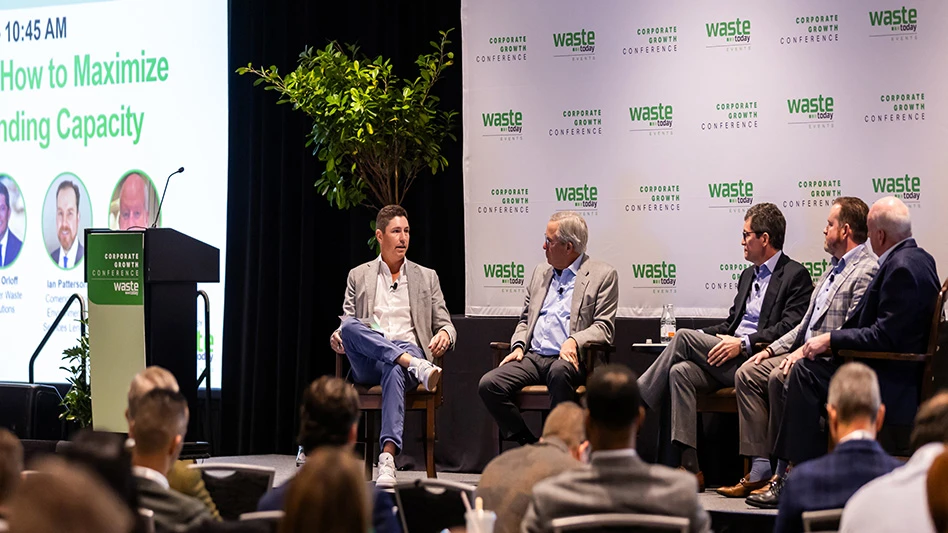
Industry experts shared how to maximize banking and bonding capacity during a panel discussion at the 2025 Corporate Growth Conference Nov. 13 in Chicago. Aligning with a banking, capital or bonding partner can accelerate a company’s growth in the sector.
Alek Orloff, chief financial officer at Dallas-based Frontier Waste Solutions, said it all starts with a healthy relationship built on mutual trust and lots of communication. All parties have to be acting in a way that’s predictable and forward-looking.
“Some people when they want to get credit are almost nervous about the process,” Orloff said. “And banks are scary places, and people are talking about all these different underwiring criteria, and you think ‘Oh, my goodness, I need to impress the bank.’ ... Yes, you do have to do those things, but the bank also needs to be just as predictable when you’re growing and you’re staying within the agreed-upon parameters of your credit agreement and doing responsible things like delivering your financial results to the bank on time.”
He stressed that it’s very important that the bank understands the industry intimately.
“You need to know that when you want to ask for the next $100 million from your bank group that they’re going to say yes irrespective of what’s going on in the market around you,” Orloff said. “You really want to make sure that the relationship you have with your bank is based on your performance and not just sort of market variances that might upset some institutions.”
Jeff Kendall, president and managing partner of Pittsburgh-based Laurel Mountain Partners, said picking the right lending partner starts with identifying your needs clearly.
Orloff added that operators have many choices, so it’s important to vet them carefully and partner with an institution that understands the dynamics of the waste industry.
Banks also will do their due diligence. Ian Patterson, senior vice president and group manager of Comerica Bank’s Environmental Services Group, said free cash flow is a key metric his group uses.
The Dallas-based bank looks at the operator’s ability to repay its loans. Beyond that, the bank will review the company’s assets, their age and how well they’ve been maintained and a projection of how long they will last.
“We are not liquidators; we lend on a cash-flow basis,” Patterson said. “It wouldn’t be good for us if we came in and said we’re taking your trucks. It would damage our image in the industry quite a bit. So, making sure that the cash flow is there and it’s not just a historical cash flow, it’s a go-forward cash flow.”
Ultimately, the bank must buy into where the company is going, not just what it’s accomplished.
“I think it’s really important to build the framework and say, ‘This is what we want the business to look like’ and ‘This is why all of these things we’ve done make sense,’” Orloff said. “And do that in advance, so that you tell your banker a story. Everybody loves a good story. It’s all the better when you tell a story up front and then you make those things come true along the way. That develops incredible credibility with your bankers.”
Latest from Construction & Demolition Recycling
- Work Truck Incyte launches market discovery intelligence platform
- BlueScope posts 118 percent increase in net profit
- Metso reports active aggregates market
- Terex reports higher Q4 sales, strong bookings to close 2025
- ABC’s backlog indicator falls to four-year low in January
- NDA Phoenix: Developing the future demolition workforce
- Construction unemployment rate decreases slightly in December 2025
- HCT reports receptive market for upgrade kits