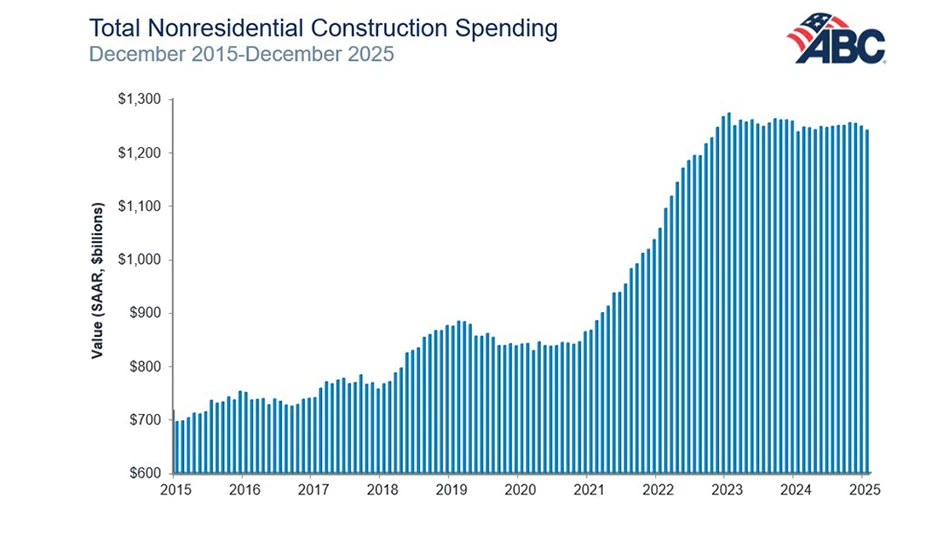
New construction starts in October 2006 fell 4 percent compared to the month before, according to McGraw-Hill Construction, Lexington, Mass.
In the first ten months of 2006, overall construction spending was flat compared to 2005, although there were ups and downs among the three sectors.
The pace of construction starts has slowed markedly in recent months, according to a McGraw-Hill economist. “The primary reason for this year’s slowing pace of construction starts has been the sharp pullback by single-family housing,” says Robert A. Murray, vice president of economic affairs for McGraw-Hill Construction. “The slide for single-family housing grew pronounced in late spring, and it has been followed by a further loss of momentum through October.”
Adds
The non-residential sector receded in October by 4 percent, with reduced contracting reported for the two largest institutional structure types: educational buildings, down 12 percent; and health care facilities, down 36% percent.
Large manufacturing projects that reached groundbreaking in October included a $320 million cement plant in
Office construction grew 15 percent, as large projects reached groundbreaking in
Highway construction in October held steady with the elevated amount achieved in September, showing the benefits of the enhanced funding coming from the current multiyear federal transportation bill, according to McGraw Hill.
In the residential sector, new contract spending was down 4 percent in October compared to the month before. On a year-to-date basis, single-family housing during the January-October period of 2006 dropped 11 percent in dollar volume. Only the South Central region posted a gain (6 percent), while activity in the other geographic regions dropped from 9 to 19 percent.
By geography, total construction across all sectors during the first ten months of 2006 was mixed: the South Central, up 13 percent; the Northeast, up 2 percent; the Midwest and West, each down 2 percent; and the
Latest from Construction & Demolition Recycling
- Vecoplan to present modular solutions at IFAT 2026
- Terex Ecotec appoints Bradley Equipment as Texas distributor
- Greenwave raises revenue but loses money in Q2 2025
- Recycled steel prices hold steady
- John Deere launches ‘Building America’ excavator contest
- Triumvirate Environmental acquires Environmental Waste Minimization
- Coastal Waste & Recycling expands recycling operations with Machinex
- Reconomy acquires German-based GfAW