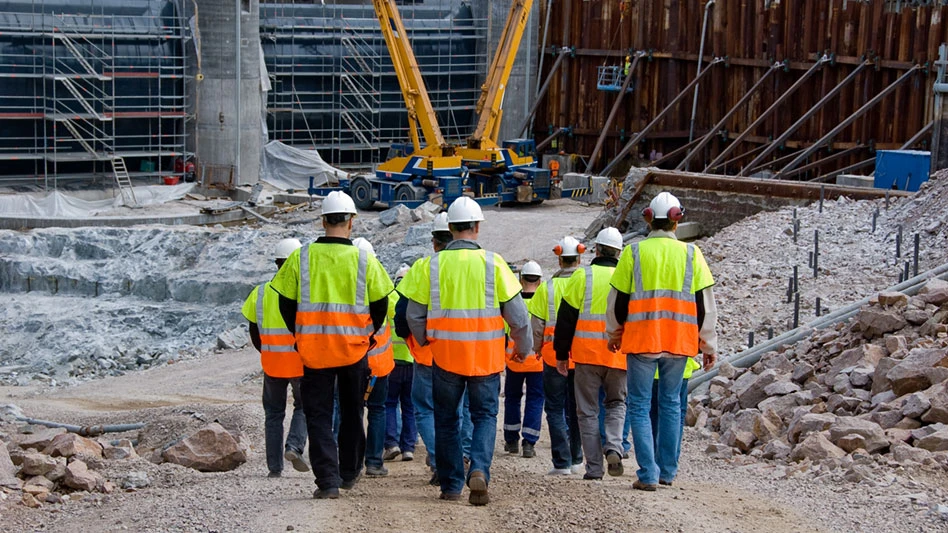
Tund | stock.adobe.com
The construction sector has enjoyed nearly uninterrupted positive momentum since the easing of COVID-19 restrictions in late 2020 and into 2021, but several statistics spell out what could be the first sizable hiccup since the pandemic lockdown.
In his early July “The Copper Journal Weekly Report,” New York-based red metals industry analyst John E. Gross lists seven construction-related statistics or indicators and where they stand as of mid-2025.
On the residential front, Gross says housing starts this May fell by 9.8 percent compared with the previous month and by 4.6 percent compared with May 2024.
The drop in activity corresponds with a reduction in new home sales. Those fell by 13.7 percent this May compared with the prior month and by 6.3 percent compared with May 2024.
The drop in nonresidential activity appears less alarming. Overall building permits issued this May are down just 2.0 percent compared with this April and are off by just 1.0 percent compared with May 2024.
In his chart, Gross also refers to monthly government statistics showing a 0.3 percent decline in construction spending this May compared with April and a more concerning 3.5 percent drop in spending compared with May 2024.
Regarding those figures, the Arlington, Virginia-based Associated General Contractors of America (AGC) says construction spending has declined for four months in a row, and the 3.5 percent year-on-year decline is “the largest year-over-year decrease since February 2019,” before the COVID-19 pandemic occurred.
“Uncertainty about tariffs, tax rates and labor availability are making it hard for many developers to risk moving forward with planned construction projects,” says Ken Simonson, chief economist of the AGC, regarding the current landscape.
Each of those issues has governmental origins, and AGC says government policy can play a role in addressing them.
The group says it is urging Congress and the Trump administration to take steps that can help in “resolving the trade disputes that are prompting the proposed tariffs” and to identify “more ways for people to enter the country lawfully to work in construction.”
Metals industry analyst Gross says prospects in the residential sector face one more hurdle. A statistic he lists says as of the end of May, the United States had 1.54 million homes for sale on the market.
That “home inventory” figure, says Gross, was 6.2 percent higher this May compared with the prior month, and a sizable 20.3 percent higher compared with the May 2024 home inventory figure.
“The numbers are not good, and the charts underscore just how bad things are in this key sector of our economy,” writes Gross. “Although new and existing home sales remain weak, the inventory of existing homes for sale has risen.”
A separate AGC analysis covering activity for this June indicates that despite concerns in the residential sector, the construction industry overall is continuing to hire new workers—and is paying them higher wages.
According to AGC, total U.S. construction employment in June of 8.324 million payroll jobs represents a seasonally adjusted increase of 15,000 jobs compared with the previous month, and that figure represents an increase of 121,000 jobs, or 1.5 percent growth, compared with 12 months earlier.
Adds the organization, “Average hourly earnings for production and nonsupervisory employees in construction—including most onsite craft workers and many office staff—increased 4.6 percent over the year to $37.20. That gain exceeded the 3.9 percent rise in pay for such workers in the overall private sector.”
“Hiring is holding up better than expected, especially with upward revisions to prior months’ data, as persistent labor shortages prompt firms to hire when they can,” says Macrina Wilkins, a senior research analyst with the AGC.
Latest from Construction & Demolition Recycling
- Sybilion seeks to help manufacturers confidently address volatility
- Construction backlog rebounds in February
- USTR to study additional steel, aluminum tariffs
- Shawmut commemorates National Women in Construction Week
- Holcim expands presence in Colombia with agreement to acquire Cemex operations
- eFactor3 enters into separation tech partnership
- Mitsubishi Logisnext Americas to rebrand as Logisnext Americas
- Burns Services diverts more than 1.2M tons of C&D materials from landfills