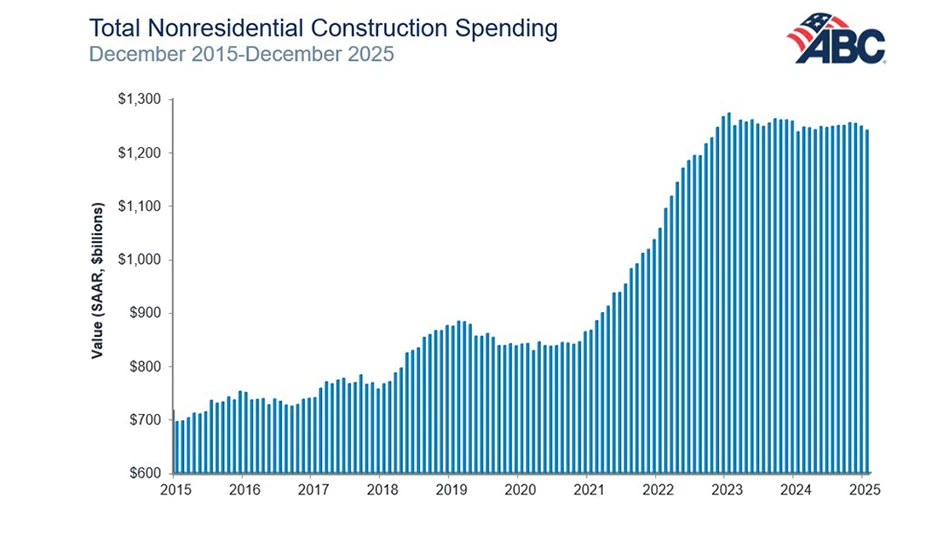
Prices for inputs to construction fell 0.5 percent in August but are 8.1 percent higher than at the same time one year ago, according to an Associated Builders and Contractors (ABC), Washington, analysis of Bureau of Labor Statistics (BLS) data released Sept. 12. Nonresidential construction input prices fell 0.4 percent in August but are up 8.3 percent year over year. Softwood lumber prices plummeted 9.6 percent in August yet are up 5 percent on a yearly basis (down from a 19.5 percent increase year over year in July).
“Stakeholders will be tempted to look upon this month’s inputs to the construction Producer Price Index report as evidence that the cycle of rapidly rising prices is nearing an end,” ABC Chief Economist Anirban Basu says. “Prices of key inputs have been high for quite some time, which would tend to induce a larger supply of these items and, in turn, moderate prices.
“Some may also conclude that ongoing progress in trade negotiations with nations including Mexico and Canada has helped to moderate input prices. Still others might point to growing economic turmoil in nations like Turkey and Argentina. Economists would also note the likely impact of a strong U.S. dollar on import and commodity prices. While all of these are potential explanations, another possibility is that the August data are largely statistical aberrations. Metal prices continue to move higher on a monthly basis, with recently enacted tariffs representing a likely explanation.
“Softwood lumber, the subject of an ongoing trade dispute with the Canadians, experienced a significant dip in price on a monthly basis. The price of softwood may have fallen in response to a weakening single-family residential construction market, as home builders have been wrestling with a combination of labor shortages, higher land prices and weakening demand due to higher mortgage rates.
“In the final analysis, the falling input prices trend likely won’t continue. The economy is still strong, and ABC’s Construction Backlog Indicator remains elevated in both public and private construction segments. Inflation expectations have shifted, with purchasers of construction services now anticipating price increases, and therefore, [are] more willing to accommodate them. Moreover, issues related to tariffs and trade wars persist. Accordingly, estimators and construction companies continue to consider the likelihood of additional input price increases for the balance of 2018 and into 2019.”
Latest from Construction & Demolition Recycling
- Waste Pro files brief supporting pause of FMCSA CDL eligibility rule
- Des Moines project utilizes recycled wind turbine blades
- Vecoplan to present modular solutions at IFAT 2026
- Terex Ecotec appoints Bradley Equipment as Texas distributor
- Greenwave raises revenue but loses money in Q2 2025
- Recycled steel prices hold steady
- John Deere launches ‘Building America’ excavator contest
- Triumvirate Environmental acquires Environmental Waste Minimization