Two construction trade organizations have reported that August 2017 marked a busy month for hiring and employment in the sector, with jobs being added—but sometimes being hard to fill.
The Washington-based Associated Builders and Contractors (ABC), citing United States Bureau of Labor Statistics figures, says national construction employment rebounded in August, adding 28,000 net new jobs on a seasonally adjusted basis. It was the best month for job gains in construction since February 2017, according to ABC.
The construction industry unemployment rate, which is available only on a non-seasonally adjusted basis, fell two-tenths of a percentage point and now stands at 4.7 percent, says ABC. This represents the first time during the past five years that the industry’s unemployment rate declined in August. The unemployment rate for all U.S. industries inched up to 4.4 percent.
“Data work in strange ways,” says ABC Chief Economist Anirban Basu. “In July, overall national job growth remained strong, while construction statistics sagged. One month later, the construction jobs picture looks much brighter, while headline numbers for the broader economy appear a bit less benign.
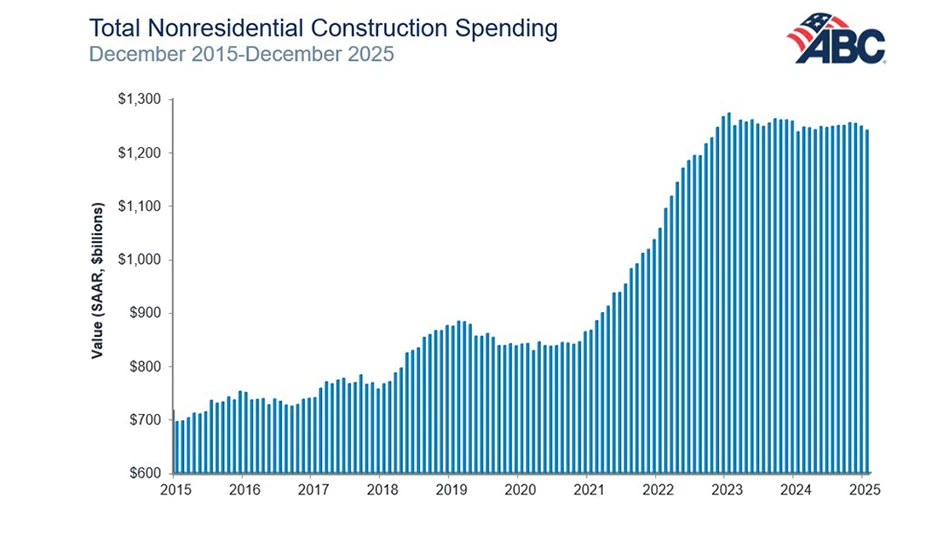
He continues, “Rather than focusing on oscillations in monthly data, look at the broader picture. Here’s what we know: The U.S. labor market remains strong, as evidenced by enormous numbers of job openings, and construction activity remains robust, especially in certain private segments. This helps explain the 44,800 net new positions added by nonresidential specialty trade contractors during the past year. There is even evidence of growing demand for public construction services, with the heavy and civil engineering segment adding another 6,600 net new positions in August and more than 45,000 during the past year.
Basu concludes, “The result is that demand for construction workers continues to expand despite occasional contradictory information emerging from monthly statistics. Accordingly, construction firms are increasing their scramble rate for employees, driving up hourly compensation in the process.”
The Arlington, Virginia-based Associated General Contractors of America cites the same August employment figure and also remarks that contractors face a lack of experienced workers, with a majority of firms reporting having a hard time finding qualified workers.
“Construction firms have stayed busy, adding employees in the past year at nearly twice the rate of employers throughout the economy, but more than two-thirds of contractors report difficulty finding craft workers as the number of unemployed, experienced construction workers hit a 17-year low in August,” says Ken Simonson, the association’s chief economist.
Regarding a recent AGC survey, Simonson comments, “Half or more of the 1,608 respondents said they were having trouble finding carpenters, bricklayers, electricians, concrete workers or plumbers. Some salaried positions—notably project managers and supervisors—are also hard to fill.”
The AGC is among those urging members of the U.S. Senate to pass a new Perkins Act the group says has received widespread bipartisan support in the House. The measure increases funding for and reforms career and technical education programs so more schools can offer construction-focused programs. “Exposing students to construction as a career path will encourage more of them to pursue these high-paying careers,” says Stephen E. Sandherr, the AGC’s CEO.
Latest from Construction & Demolition Recycling
- Vecoplan to present modular solutions at IFAT 2026
- Terex Ecotec appoints Bradley Equipment as Texas distributor
- Greenwave raises revenue but loses money in Q2 2025
- Recycled steel prices hold steady
- John Deere launches ‘Building America’ excavator contest
- Triumvirate Environmental acquires Environmental Waste Minimization
- Coastal Waste & Recycling expands recycling operations with Machinex
- Reconomy acquires German-based GfAW