The board of directors of the Construction & Demolition Recycling Association (CDRA), Milwaukee, has announced it has authorized the first phase in a study on construction and demolition (C&D) fines.
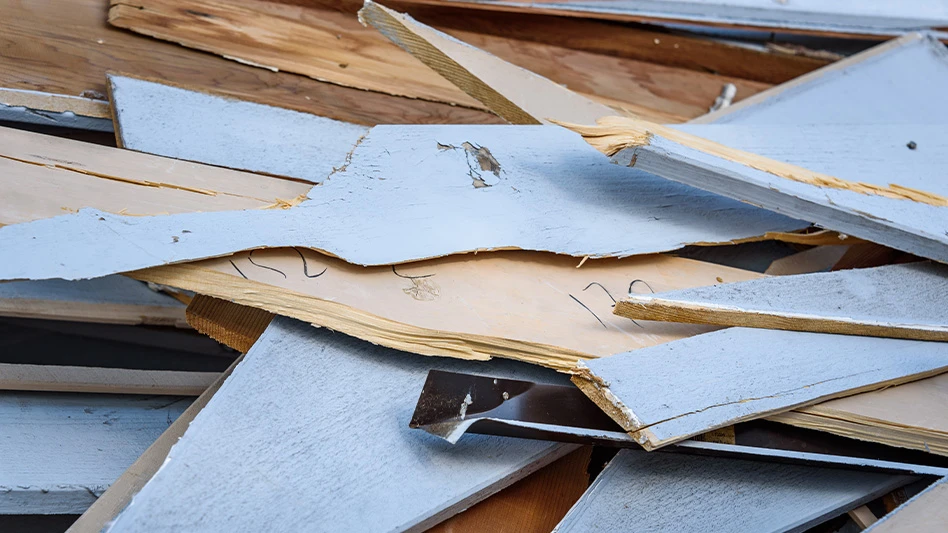
In an effort to develop new markets for a sometimes problematic material, the CDRA says the initial step of the study will be testing to determine the material characteristics of the recovered screen materials from different regions across the country.
While several C&D recyclers have already volunteered to be a part of the study and provide financial support to defray the costs of the study, the CDRA says it is looking for members to participate to determine the level of, if any, contaminants in the material. All results will be kept confidential, the CDRA says.
The study, which will be conducted by Dr. Timothy Townsend at the University of Florida, started out as a look at polycyclic aromatic hydrocarbons (PAHs), but also will examine the presence of other contaminants. Later phases of the study will try to ascertain what markets the material could be used. Because of the diversity of recovered screened materials (RSMs) throughout the country, the results will be studied by regions, and also by facility type, such as whether the facility takes in mostly construction or demolition materials, according to the CDRA.
For more information, email info@cdrecycling.org or call (866) 758-4721(866) 758-4721 FREE.
In an effort to develop new markets for a sometimes problematic material, the CDRA says the initial step of the study will be testing to determine the material characteristics of the recovered screen materials from different regions across the country.
While several C&D recyclers have already volunteered to be a part of the study and provide financial support to defray the costs of the study, the CDRA says it is looking for members to participate to determine the level of, if any, contaminants in the material. All results will be kept confidential, the CDRA says.
The study, which will be conducted by Dr. Timothy Townsend at the University of Florida, started out as a look at polycyclic aromatic hydrocarbons (PAHs), but also will examine the presence of other contaminants. Later phases of the study will try to ascertain what markets the material could be used. Because of the diversity of recovered screened materials (RSMs) throughout the country, the results will be studied by regions, and also by facility type, such as whether the facility takes in mostly construction or demolition materials, according to the CDRA.
For more information, email info@cdrecycling.org or call (866) 758-4721(866) 758-4721 FREE.
Latest from Construction & Demolition Recycling
- Terex Ecotec appoints Bradley Equipment as Texas distributor
- Greenwave raises revenue but loses money in Q2 2025
- Recycled steel prices hold steady
- John Deere launches ‘Building America’ excavator contest
- Triumvirate Environmental acquires Environmental Waste Minimization
- Coastal Waste & Recycling expands recycling operations with Machinex
- Reconomy acquires German-based GfAW
- CommanderAI launches HaulerCentral database