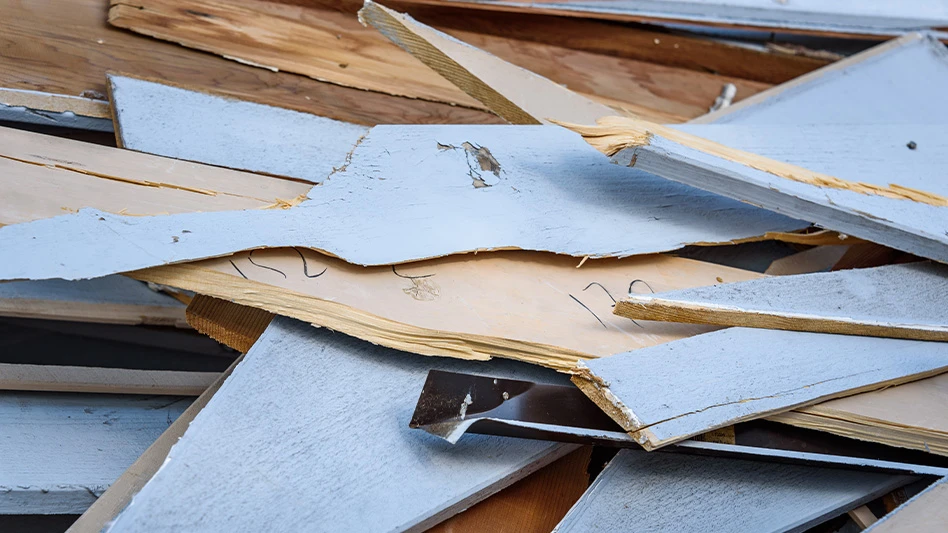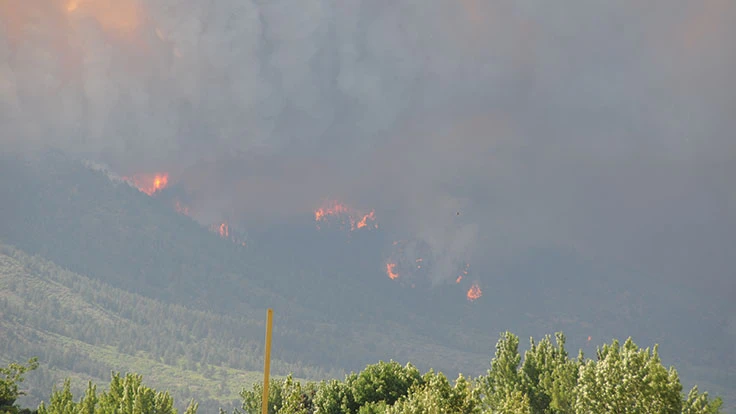
The California Department of Resources Recycling and Recovery (CalRecycle) is leading teams in Lake County to remove harmful debris left behind by the 3,929-acre Clayton Fire. The debris removal operation got underway on Oct. 17 and is expected to last 60 to 90 days.
“This is the fourth major fire to hit Lake County since 2015 and the fourth time CalRecycle has been called upon to help clear these burn sites so residents can rebuild,” CalRecycle Director Scott Smithline said. “Our crews, together with state and local partner teams, are moving forward with the care and urgency these disaster cleanups require.”
California Governor’s Office of Emergency Services tasked CalRecycle with the design, implementation, and oversight of the cleanup operations with assistance from Caltrans, the California Air Resources Board, and the California Department of Fish and Wildlife. Before debris removal could begin, the California Department of Toxic Substances Control had to clear affected properties of household hazardous waste, such as batteries, used oil, and other hazardous materials. CalRecycle crews are now following the process outlined below:
CalRecycle Debris Removal Process | |
| 1) Site Documentation | Measure and record foundation, structures, debris, utility infrastructure, and property-specific hazards |
| 2) Site Testing and Analysis | Obtain and evaluate soil samples to establish cleanup goals for the project; identify and remove asbestos-containing materials |
| 3) Debris Removal | Remove metals and concrete for recycling, ash and soil for disposal |
| 4) Soil Grading | Scrape and remove remaining contaminated soil and smooth ground surface |
| 5) Confirmation Sampling | Sample and analyze soil, compare results to cleanup goals |
| 6) Erosion Control | Implement storm water best management practices to control sediment runoff and promote vegetation growth |
Homeowners who wish to take advantage of CalRecycle’s free debris removal program must return signed “Right of Entry” forms to Lake County’s Department of Public Health. Those who wish to conduct their own cleanup may do so, but should be aware of all safety and environmental standards and requirements. Lake County has guidelines available for residents who wish to pursue this option.
A debris removal operations center has been established at 16195 Main St. in Lower Lake to coordinate debris removal planning and answer questions from homeowners. Residents may call (707) 994-2195 for assistance.
CalRecycle is wrapping up wildfire recovery operations for the 48,019-acre Erskine Fire in Kern County. On Oct. 20, crews completed debris removal and are currently focused on site testing and erosion control implementation. Once complete, Kern County can approve new building permits on the properties.
Latest from Construction & Demolition Recycling
- Des Moines project utilizes recycled wind turbine blades
- Vecoplan to present modular solutions at IFAT 2026
- Terex Ecotec appoints Bradley Equipment as Texas distributor
- Greenwave raises revenue but loses money in Q2 2025
- Recycled steel prices hold steady
- John Deere launches ‘Building America’ excavator contest
- Triumvirate Environmental acquires Environmental Waste Minimization
- Coastal Waste & Recycling expands recycling operations with Machinex