MaxSafaniuk | stock.adobe.com
The Canadian Automobile Association (CAA), Ottawa, Ontario, has joined nine other organizations representing civil infrastructure leaders, builders, suppliers and engineers to advocate for the increased use of recycled crushed aggregates (RCA) in public infrastructure projects across Ontario.
With CAA on board, the coalition that launched earlier this year is advocating for policy changes that will incentivize and mandate the use of RCA in projects like roads, subdivisions, highways, bridges and tunnels. The coalition says it seeks to harmonize municipal specifications through provincial standards to build greener, more cost-effective public infrastructure.
“As the voice of Canadian motorists, CAA supports smarter infrastructure investments that improve road safety, durability and reliability,” says Lauren Fisher, manager of government and stakeholder relations for CAA South Central Ontario. “The use of recycled crushed aggregates is proven to deliver reliable performance, while cutting costs and carbon emissions. We’re proud to join this important coalition and support a mandate that will benefit drivers, taxpayers and the environment.”
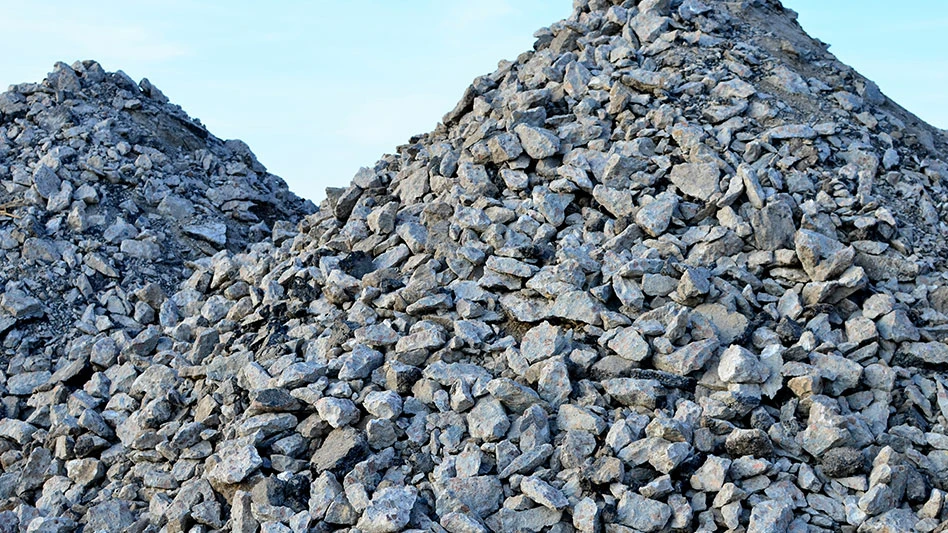
RCA is produced by reclaiming and recycling concrete and asphalt that would otherwise end up in landfills. Although RCA has been used in major infrastructure projects, like 400-series highways and the Toronto Pearson Airport, the coalition says RCA use in municipal projects is limited by some existing local policies.
If Ontario municipalities mandate using 20 percent RCA in infrastructure projects, they can save more than $260 million annually and reduce emissions equivalent to removing 15 million gas cars from the road every year, according to the coalition.
The 10 coalition members include:
- CAA;
- Concrete Ontario;
- Good Roads;
- Greater Toronto Sewer and Watermain Construction Association;
- Heavy Construction Association of Toronto;
- Residential and Civil Construction Alliance of Ontario;
- Ontario Road Builders Association;
- Ontario Sand, Stone, and Gravel Association;
- Ontario Society of Professional Engineers; and
- Toronto and Area Road Builders Association (TARBA).
“CAA’s support underscores the fact that this isn’t just a construction issue—it’s a public interest issue,” says Raly Chakarova, executive director of TARBA. “Using more recycled materials in infrastructure projects can safeguard the long-term expansion of our transportation networks while preserving nonrenewable resources and reducing carbon emissions, waste and traffic congestion. Beyond an increased use of sustainable materials, standardizing construction specifications and contracts at the municipal level can go further to rein in rising construction costs, speed up project delivery and ensure higher quality outcomes."
Latest from Construction & Demolition Recycling
- Vermeer announces plan to build new facility in Des Moines metro area
- Capstar Disposal expands roll off dumpster rental services
- Supreme Court strikes down IEEPA tariffs
- Casella details facility closures, expansion efforts
- DPR Construction cuts ribbon on Silicon Valley office, prefab facility
- Constellium posts record Q4 adjusted EBITDA
- Amrize closes PB Materials acquisition
- QCC torches include customizable features