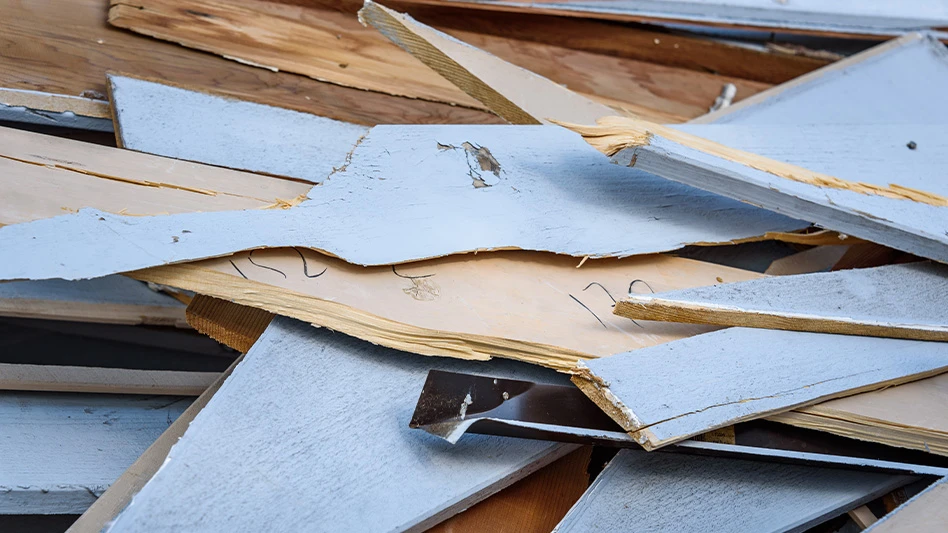
A proposed law mandating at least half the waste created by large-scale demolition or renovation projects in Chico, Calif., be recycled received preliminary approval from the City Council this week.
Some on the council, however, worry that the law could dissuade businesses from relocating here.
The council voted in favor to draft a law requiring that 50 percent of waste generated by the demolition of multi-family, commercial and industrial buildings 10,000 square feet or larger be recycled. The provision also would apply to renovation projects in which 10,000 square-feet or more of an existing building is being modified. The proposed law would not apply to single-family homes.
"We're looking at large commercial and industrial projects," said city management analyst Linda Herman.
The law will have to come back for further council consideration before it can be approved.
Councilors Steve Bertagna and Larry Wahl cast the dissenting votes. Bertagna said the measure is a do-nothing law that could dissuade businesses from moving to Chico if they have the extra expense of renovating a building, he said.
"It is becoming cost-effective for people just to recycle those materials to begin with," Bertagna said.
And the law could lead to more regulations, especially on houses, he said. The cost of city enforcement, plus the cost of recycling could drive up home prices, he said.
"The next step is that we're going to be talking about remodeling your home or your bathroom and the cost associated with monitoring the ordinances," Bertagna said.
The state obligates cities to divert 50 percent of all waste away from landfills. About 12 percent 4 million tons of all waste generated in California comes from construction and demolition projects, according to figures from the California Integrated Waste Management Board. The castoffs include such things as concrete, asphalt, wood, cardboard, brick and scrap metal.
Not all such projects need a use permit, however. The law under consideration would require a developer, or possibly someone conducting large-scale renovations to submit a recycling plan that estimates how much waste is likely to be generated by the project. It also would require an estimate of the maximum amount that could reasonably be recycled.
Furthermore, the party undertaking the work would have to tell the city how much will go to the landfill. And after the project's completion, they would have to submit receipts to the city verifying the amount recycled or taken to the landfill. A violation of the proposed law could carry an undetermined fine. Chico (California) Enterprise Record
Latest from Construction & Demolition Recycling
- Des Moines project utilizes recycled wind turbine blades
- Vecoplan to present modular solutions at IFAT 2026
- Terex Ecotec appoints Bradley Equipment as Texas distributor
- Greenwave raises revenue but loses money in Q2 2025
- Recycled steel prices hold steady
- John Deere launches ‘Building America’ excavator contest
- Triumvirate Environmental acquires Environmental Waste Minimization
- Coastal Waste & Recycling expands recycling operations with Machinex