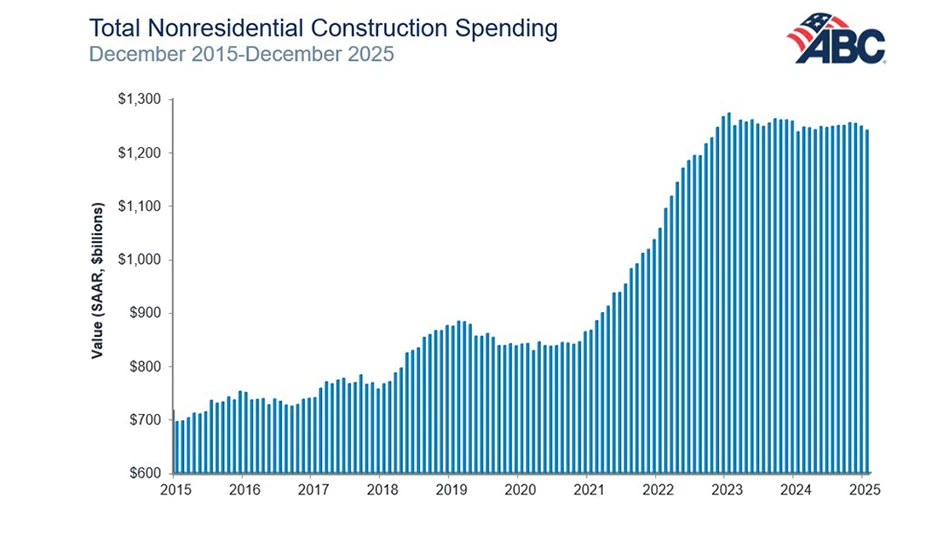
An estimated two-thirds of the nation’s nonresidential construction companies are planning to cut their payrolls, according to new employment and business forecast figures released Jan. 8 by the Associated General Contractors of America (AGC).
“Unless the business climate changes significantly and soon, the construction sector will continue to experience the kind of devastating job losses and crippling declines in business activity that will undermine efforts to end the recession,” says Stephen Sandherr, the association’s chief executive officer.
Construction is one of many suffering industries, according to the latest report from the U.S. Labor Department, released Jan. 9, which shows overall unemployment in the
The AGC forecast results, which are based on a representative survey conducted by the construction association late in 2008, found no relief in sight for construction companies that already have been among the hardest hit by the economic slowdown. Many construction companies experienced significant slowdowns beginning late last year, resulting in a 10 percent decline in the number of construction workers since 2006, Sandherr notes.
According to the forecast figures, the association’s member companies have seen or are planning for declining activity in every type of construction market. Ninety-two percent of building contractors and 93 percent of road builders are expecting or experiencing declining activity. More than 83 percent of utility contractors are bracing for declines while 77 percent of water resource contractors are expecting a decline in business building levees or locks.
The forecast did find, however, that planned investments in infrastructure projects as part of the proposed government stimulus package is likely to dramatically improve the employment and business outlook for the year. For example, 85 percent of nonresidential construction companies would either cancel layoffs or add new employees if states embarked on stimulus-funded infrastructure projects.
According to the forecast, construction companies would increase their payrolls by 25 percent if the proposed stimulus package included new infrastructure investments. And construction companies predict they would invest an average of $500,000 this year in new equipment if they received new work as part of a stimulus package.
“With a stimulus, construction companies can get more people to work and more money into the economy in a way that will immediately boost our economy,” Sandherr says. “Without a stimulus, construction companies will cut jobs, slash spending and continue to be among the hardest hit sectors within our economy.”
Sandherr notes that the association is working to find ways to improve the business environment for the construction community. He says builders across the country are urging Congress to include infrastructure investments in the stimulus package and that the association is calling for $2.2 billion to help renovate hundreds of federal facilities and additional funds to help repair schools.
“We are doing everything imaginable to ensure that our construction employment and business forecast does not become a reality,” Sandherr says.
Latest from Construction & Demolition Recycling
- Terex Ecotec appoints Bradley Equipment as Texas distributor
- Greenwave raises revenue but loses money in Q2 2025
- Recycled steel prices hold steady
- John Deere launches ‘Building America’ excavator contest
- Triumvirate Environmental acquires Environmental Waste Minimization
- Coastal Waste & Recycling expands recycling operations with Machinex
- Reconomy acquires German-based GfAW
- CommanderAI launches HaulerCentral database