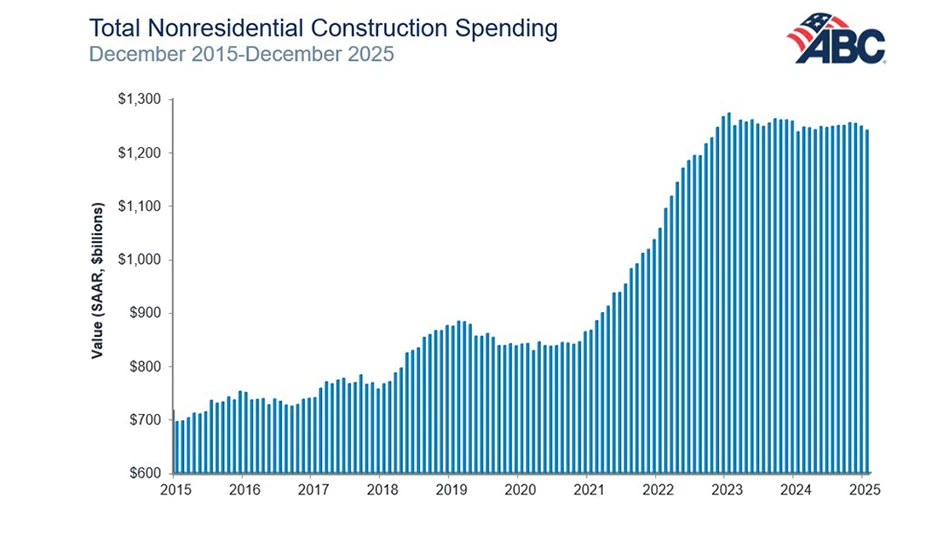
Overall construction input prices increased 1.1 percent in January, reversing a slight decline in December 2017, according to an Associated Builders and Contractors (ABC) analysis of Bureau of Labor Statistics data released Feb. 15. Compared to this time last year, overall construction materials prices are up 4.9 percent. Nonresidential construction materials prices are up 4.7 percent year over year and up 1 percent on a monthly basis.
The price of natural gas fell 13.1 percent in January and is down 31 percent on a year-over-year basis. In stark contrast, the price of crude petroleum rose 11.6 percent in January on a monthly basis and is 30.3 percent above its year-ago level. February has been different to date, with burgeoning U.S. production helping push down the price of oil.
“The expectation is that construction materials prices will generally edge higher during the course of 2018,” ABC Chief Economist Anirban Basu says. “After all, both domestic and global economies are strengthening, business and investor confidence is elevated, and construction backlog is rising. On top of that, the U.S. dollar has weakened in recent weeks, translating into more aggressive increases in the price of imports.
“One possible exception is oil. U.S. rig counts have been rising recently in response to North American oil prices that recently topped out at $65 per barrel,” Basu says. “Unlike producers in other parts of the world, American producers appear willing and able to respond quickly to price shifts. The implication is that if oil prices rise from current levels, America’s producers will respond quickly with additional supply and stabilize prices. This is precisely the dynamic that we have observed during the past several weeks.
“The typical contractor should expect materials price increases in the range of 5 percent this year. Larger increases are possible, but industry demand for materials will be constrained by growing skills shortages,” Basu continues. “There is only so much output that America’s construction firms can deliver during any given period given workforce constraints, and those constraints serve to limit the demand for materials at any given moment.”
Latest from Construction & Demolition Recycling
- Vecoplan to present modular solutions at IFAT 2026
- Terex Ecotec appoints Bradley Equipment as Texas distributor
- Greenwave raises revenue but loses money in Q2 2025
- Recycled steel prices hold steady
- John Deere launches ‘Building America’ excavator contest
- Triumvirate Environmental acquires Environmental Waste Minimization
- Coastal Waste & Recycling expands recycling operations with Machinex
- Reconomy acquires German-based GfAW