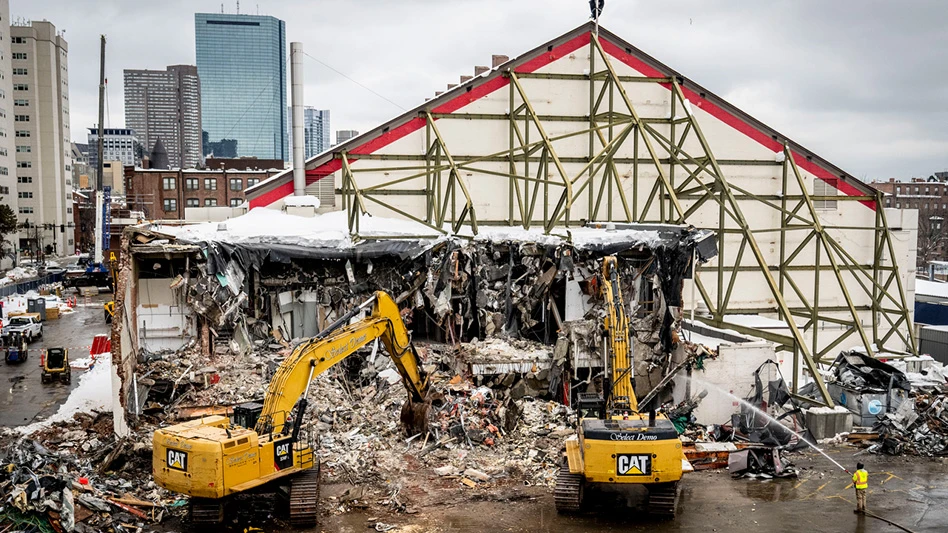
Demolition contractors face many challenges on jobsites, but taking the time to implement a recycling plan can help maximize the profitability of the metals recovered.
One way to do that is by bringing in outside recycling companies that specialize in identifying, preparing and valuing the recovered metals. These companies also have the knowledge to help build a sound recycling plan to maximize recovery and develop ways contractors can streamline the sorting process by identifying potential issues ahead of time.
“Not every demolition job is the same,” says Kevin Trimm, owner of HRH Metals, a scrap metal recycler based in Moody, Alabama. “You have all shapes and sizes, but I would say, right out of the gate, I don’t care what the size of a demolition job is; three things that we just will not negotiate on is our service, efficiency and safety. Most demolition contractors, or whoever our client is, I tell them we want to be able to walk away from this demolition job and you never know that we’ve been there until you get a check in the mail.”
HRH has encountered just about everything throughout its history, which dates back to 1942. To get the most out of the materials recovered from a site, it’s important to ask the right questions ahead of time to figure out possible pain points, what equipment will be needed to perform the job and how much processing needs to be done on-site, if possible.
“If you’re doing a demo job at a utility or power plant, you’re going to know the type, in a general sense, of materials you’re going to have coming out of their chemical plants,” Trimm says. “You’re going to have a lot of stainless; you’re going to have a lot of those high-temp items.
“Knowing that ahead of time is good, and we also ask a lot of questions on the front end so that we remain efficient and we have the right equipment there to grade material.” He adds that knowing the types of materials to be recycled is important, so HRH Metals knows when it’s not safe to process using torches.
The company’s focus on service, efficiency and safety works in its customers’ favor as well, he says.

Deep roots
HRH Metals employs 25 people from its 10-acre, full-service scrapyard in Moody. The firm provides several services, including setting up and implementing industrial scrap metal recycling programs for contractors. Trimm says recycling companies like HRH Metals can grade, sort and haul recovered metals.
He adds that HRH also has carved out a niche for providing midsized demolition services in the southeastern United States. The company also provides commercial scrap metal brokerage, with a network of customers and suppliers worldwide. Its facility in Moody accepts ferrous and nonferrous metals five days per week.
In October, Trimm purchased a majority stake in the company from longtime owners Ed Robinson, the grandson of one of the company’s founders, and Steve Crawford, who took an ownership stake in HRH Metals in 2013. Trimm had been a minority stakeholder in the company since 2020, joining in 2013 as an employee.
“I’m very excited,” Trimm says of the change in ownership. “If I wasn’t a little nervous, I don’t think I would be human, but I have a great crew here. Many of the staff we have on board have been here many, many years. I learn as much from them as they do from me, if not more.”
He mentions that he has brought on some new employees as he prepares for some changes HRH is going to make. “They have been excellent so far,” Trimm says. “I’m just really excited,” he says of the company’s plans, which also include “a lot of doing what we’ve always done.”
Identifying metals
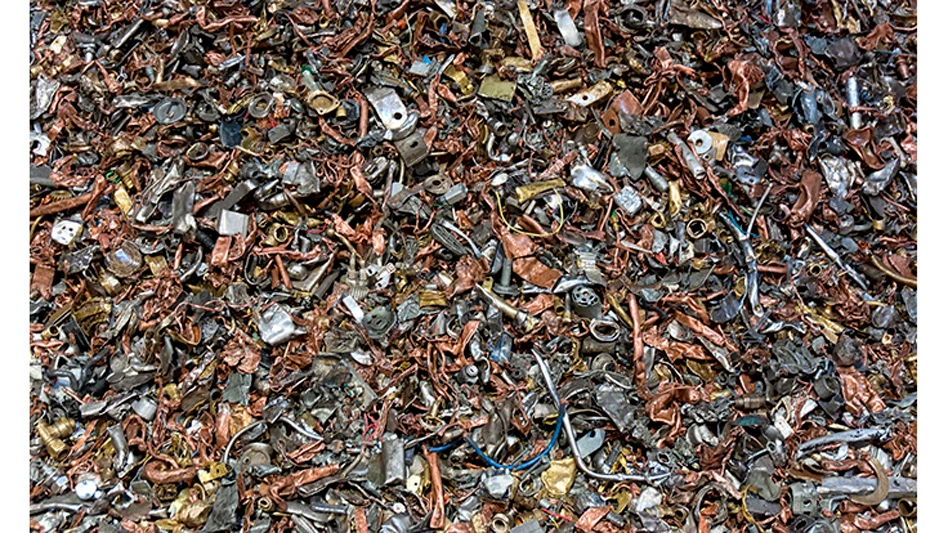
One of the easiest things to do before the job begins is find the low-hanging fruit, or, in this case, wire. Trimm says copper or aluminum wiring is some of the most valuable material recovered from a demolition site. Securing as much of it as possible beforehand will help preserve its value. Then it’s key to identify other high-value items that can be removed before the demolition process begins.
“We want to go ahead and get what we can of the higher value,” Trimm says. “We try to get the lowest hanging fruit out of there initially, and then we can start torching, bulldozing and knocking things down.”
Walking the site with a magnet is a quick way to identify ferrous metals from nonferrous metals. Focusing on removing as much of the nonferrous materials prior to teardown will help make sorting easier later because it will be harder to find this material in the wreckage.
“There have been many times we’ve gone on a demo site, and I take a sack full of hand magnets out there for them,” Trimm says. “That is the easiest way. And that’s really the first step and best practice there, but it’s hard to try to explain best practices in general because there’s so many different situations, so many different types of metal. The easiest and best thing is just [using] a magnet.”
Time is money
Contractors are looking to get in and get out as quickly as possible, which means most of the metals processing and packaging will be done off-site. Trimm says HRH Metals’ scrapyard handles this task.
Once the metal is sorted, Trimm says some sizing could be done on-site to get the material to the point where it can fit on a flat bed or in a roll-off container to be transported off-site. Proper sizing is critical to maximizing efficiency, enabling loading more material into a container or trailer, minimizing the number of trucks or trips needed to haul it.
“Most contractors are under a time crunch or may have been incentivized to get something done quickly,” Trimm says. “To have a good recycling plan ahead of time, it takes a lot of boots on the ground initially, asking the right questions, seeing what type of equipment you’re going to need, if any processing needs to be done on-site, or do we need to hurry up and get the stuff off-site, back to our yard to process.”
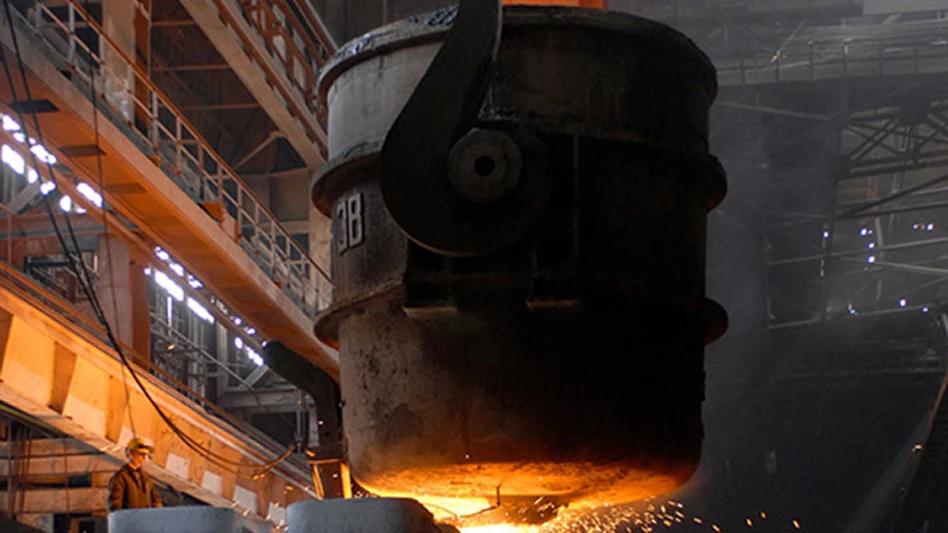
Once it’s at HRH Metals’ yard, it is sized down further to meet mills’ or foundries’ specifications.
Trimm adds that doing some processing at the demolition site is advantageous, but, most times, it’s not even allowed.
“If we have the ability to do a little bit further processing of material on-site, of course we like to do that because it eliminates the necessity of us having to bring that material to the yard [and] process it here, incurring extra freight cost,” Trimm says. “The ideal situation is to be able to process material on-site, sort [and] grade on-site, package it, take it directly to who the end user is going to be … but most of the time that’s not possible.”
Explore the November/December 2025 Issue
Check out more from this issue and find your next story to read.
Latest from Construction & Demolition Recycling
- Sybilion seeks to help manufacturers confidently address volatility
- Construction backlog rebounds in February
- USTR to study additional steel, aluminum tariffs
- Shawmut commemorates National Women in Construction Week
- Holcim expands presence in Colombia with agreement to acquire Cemex operations
- eFactor3 enters into separation tech partnership
- Mitsubishi Logisnext Americas to rebrand as Logisnext Americas
- Burns Services diverts more than 1.2M tons of C&D materials from landfills