Editor's Note: This article originally appeared in the January/February 2026 print edition of Construction & Demolition Recycling under the headline “Improving processing operations with presizing.”

When Trenton, New Jersey-based Mercer Group International first began construction and demolition (C&D) recycling operations in 2005, the company’s use of the Sherbrooke OEM sorting system reflected the industry standard at the time: manual sorting supported by screens, shaker tables and conveyor belts.
Over the years, incremental equipment upgrades improved recovery at the family owned and operated C&D materials recycling facility and transfer station. However, growing inbound volumes eventually forced leadership to reconsider a long-debated question: Could presizing material before it even hit the line improve plant performance without sacrificing sort quality?
Nearly three years ago, Mercer Group’s decision to install a Pri-Max PR6600 presizer by Wilsonville, Oregon-based SSI Shredding Systems, became a central part of its plant optimization strategy, enabling higher throughput, reduced overtime and better control over material flow.
Managing volume pressure in a growing operation
Mercer Group processes C&D material in Mercer County, New Jersey, a flow-controlled county where disposal costs and regulatory requirements create strong incentives to maximize recovery. The company used to process between 500-600 tons each day and now processes more than 700 tons per day—volumes that increasingly strained the legacy system.
“It was really more or less decided that we should presize but make the cut and the shred larger,” says Rich Mercer, president of Mercer Group.
Kyle Clark has been with Mercer Group for going on nine years. As the company’s recycling manager, he oversees day-to-day operations on the floor, manages inbound material, coordinates pickers and ensures quality control along the line.
Before installing the presizer, the facility relied on a manual feed process. Clark says as volumes increased, that setup could not keep pace with the added demands.
“We weren’t keeping up with the material that was coming in or recycling the right amount, so we looked into other grinders to up the volume going through the plant and help with the recycling,” Clark says.
Finding the right fit
Presizing was not an immediate or obvious solution. Like many C&D operators, Mercer Group initially worried that shredding material upstream would make it too small to sort effectively downstream.
“We first got a couple mobile grinders, and we ran into a lot of issues with speed and size: the right amount going through our system, so our pickers can pick it,” Clark explains.
The turning point came after visiting comparable facilities running SSI equipment. Unlike faster, high-speed shredders, SSI’s slower, higher-torque machines offered a larger, more controlled cut.
“Rather than shred it down to, let’s say, 4 or 6 inches, we shredded it down to [around] a 30-inch cut,” Mercer says. “When you ran it through the system and made a 30-inch cut, the material was still recognizable, and it was still large enough that when it did go across our sorting lines, it was big enough to be able to recognize it and to be able to sort it.”
Remaining challenges

Today, Mercer Group’s SSI presizer handles a wide range of inbound C&D materials, including wood, concrete, metal and nonferrous materials. While the presizer runs smoothly overall, metal contamination—particularly rebar and large metal pieces—still can create downtime.
“Our only jam up that we have with it is metal rebar—large pieces of metal—all get stuck in between the grinders, where we’ll have to torch it out or chain it out,” Clark says.
During peak summer months, when inbound volumes surge, those issues can occur more frequently, up to four or five times a week, if not more.
To mitigate the impact, Mercer Group assigns additional labor upstream during heavy periods, pulling metal out before it reaches the presizer.
Operational gains
Despite these challenges, Mercer and Clark believe the operational gains have been substantial. Throughput effectively has doubled since installing the SSI unit. This has translated into reduced labor costs and overtime.
“It also saved us with overtime. Before the presizer, we would run Monday to Friday, 6 to 3:30, Saturday 7 to 12,” Clark says. “Now, we’re running 6 to 2:30 Monday to Friday and a couple Saturdays when needed.”
While efficiency increased dramatically, overall recycling percentages remained relatively stable, a result Mercer anticipated.
Instead, the presizer’s value lies in clearing bottlenecks, preventing material pileups and keeping the plant moving consistently. “We’re just putting more volume through the plant, so our building’s not as packed as it used to be,” Clark says.
Lessons learned
For Clark, presizing is not a “one-size-fits-all” solution, but the benefits are substantial for an operation with significant processing tonnage.
“I think if you’re doing the volume anywhere over 400 [tons] a day, it’s well worth it,” Clark says. “The throughput is saving us on overtime and downtime, and it just helped us with labor.”
While equipment plays a central role in Mercer Group’s optimization efforts, both Mercer and Clark emphasize that discipline and communication are just as critical to the company’s operational success.
“Communication is key,” Mercer says. “It’s really everything. It’s kind of like the old saying, ‘Garbage in, garbage out.’ There’s a lot of stuff that comes in our building every day that is really not recyclable. There’s no end market for it. … The communication that we’ve learned over the years is so, so important. It always was, but I think now more than ever with the equipment we have, you want to make sure you’re utilizing it as best possible.”
For fellow operators considering presizing equipment, Mercer offers advice rooted in experience.
“If you have a hunch and you think something is going to be beneficial to you and your business, really do as much research as possible. Don’t ever jump into anything too quickly,” he says. “Do your research and make sure the investment is worth your time and money.”
The author is the associate editor of Construction & Demolition Recycling and can be contacted via email at eandrus@gie.net.
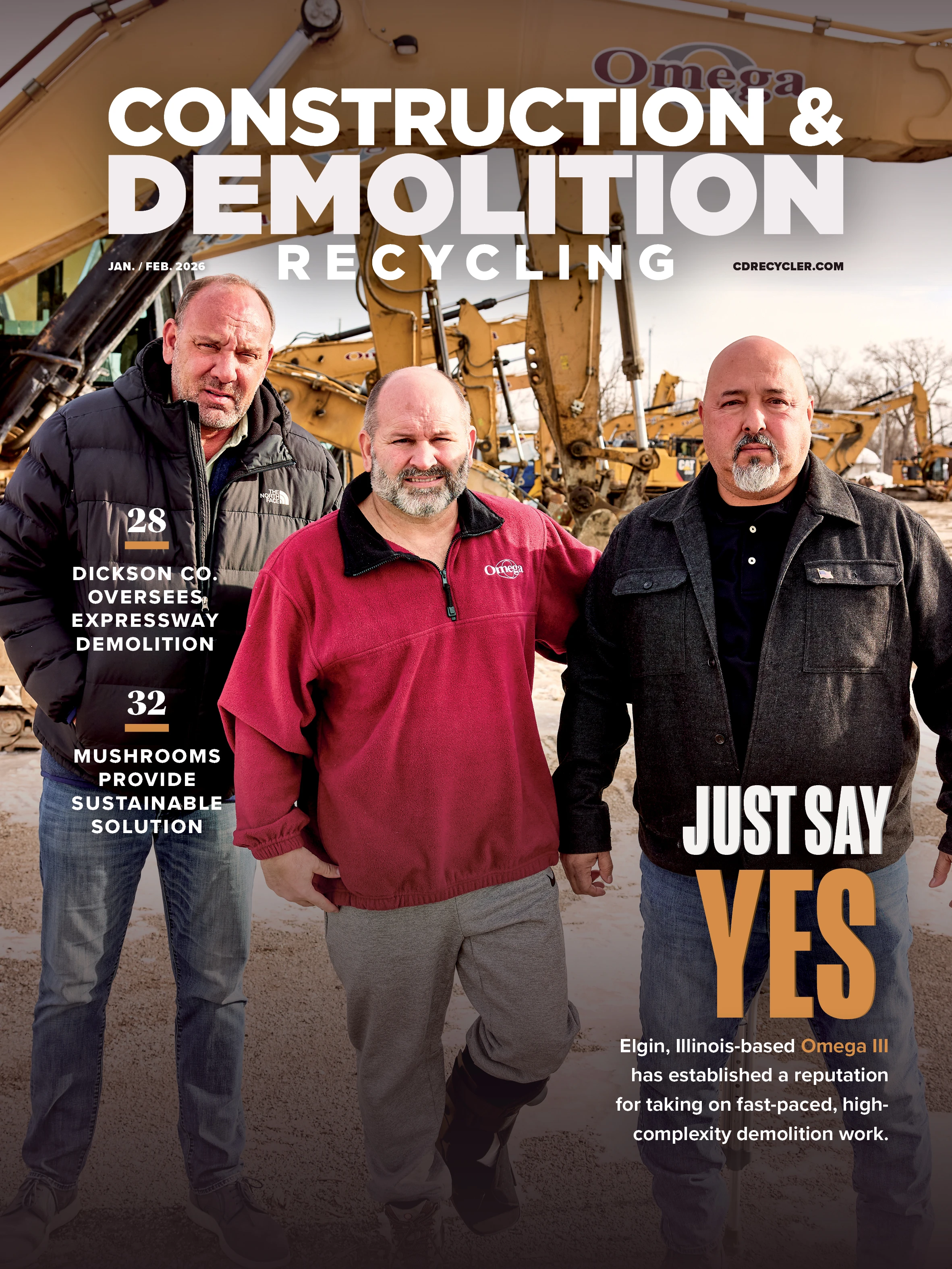
Explore the January/February 2026 Issue
Check out more from this issue and find your next story to read.